
It has been quite a while since my last entry and it’s not for lack of a desire to update, but because I have spent countless hours studying and pondering the scriptures, particularly the Book of Isaiah, which has been the focus of my attention for two years now and counting. And I’m still only getting started. More on the great words of Isaiah in coming months.
This entry is inspired by Dieter Uchtdorf’s talk, which is available to read in the May Ensign Magazine: “Are You Sleeping Through The Restoration?” There is no doubt in my mind that the restoration of the “fullness” of the gospel was not complete. There was much work left undone and the Lord revealed to us a parable to illustrate that fact. From D&C 101:43-62 we read:
43 And now, I will show unto you a parable, that you may know my will concerning the redemption of Zion.
44 A certain nobleman had a spot of land, very choice; and he said unto his servants: Go ye unto my vineyard, even upon this very choice piece of land, and plant twelve olive trees;
45 And set watchmen round about them, and build a tower, that one may overlook the land round about, to be a watchman upon the tower, that mine olive trees may not be broken down when the enemy shall come to spoil and take upon themselves the fruit of my vineyard.
46 Now, the servants of the nobleman went and did as their lord commanded them, and planted the olive trees, and built a hedge round about, and set watchmen, and began to build a tower.
47 And while they were yet laying the foundation thereof, they began to say among themselves: And what need hath my lord of this tower?
48 And consulted for a long time, saying among themselves: What need hath my lord of this tower, seeing this is a time of peace?
49 Might not this money be given to the exchangers? For there is no need of these things.
50 And while they were at variance one with another they became very slothful, and they hearkened not unto the commandments of their lord.
51 And the enemy came by night, and broke down the hedge; and the servants of the nobleman arose and were affrighted, and fled; and the enemy destroyed their works, and broke down the olive trees.
52 Now, behold, the nobleman, the lord of the vineyard, called upon his servants, and said unto them, Why! what is the cause of this great evil?
53 Ought ye not to have done even as I commanded you, and—after ye had planted the vineyard, and built the hedge round about, and set watchmen upon the walls thereof—built the tower also, and set a watchman upon the tower, and watched for my vineyard, and not have fallen asleep, lest the enemy should come upon you?
54 And behold, the watchman upon the tower would have seen the enemy while he was yet afar off; and then ye could have made ready and kept the enemy from breaking down the hedge thereof, and saved my vineyard from the hands of the destroyer.
55 And the lord of the vineyard said unto one of his servants: Go and gather together the residue of my servants, and take allthe strength of mine house, which are my warriors, my young men, and they that are of middle age also among all my servants, who are the strength of mine house, save those only whom I have appointed to tarry;
56 And go ye straightway unto the land of my vineyard, and redeem my vineyard; for it is mine; I have bought it with money.
57 Therefore, get ye straightway unto my land; break down the walls of mine enemies; throw down their tower, and scatter their watchmen.
58 And inasmuch as they gather together against you, avengeme of mine enemies, that by and by I may come with the residue of mine house and possess the land.
59 And the servant said unto his lord: When shall these things be?
60 And he said unto his servant: When I will; go ye straightway, and do all things whatsoever I have commanded you;
61 And this shall be my seal and blessing upon you—a faithful and wise steward in the midst of mine house, a ruler in my kingdom.
62 And his servant went straightway, and did all things whatsoever his lord commanded him; and after many days all things were fulfilled.
The Lord’s intent and work was to restore to the Gentiles the fullness of the gospel, which required the fullness of the priesthood. He prophecied this to the Nephites and Lamanites at Bountiful:
3 Nephi 20:27 And after that ye were blessed then fulfilleth the Father the covenant which he made with Abraham, saying: In thy seed shall all the kindreds of the earth be blessed—unto the pouring out of the Holy Ghost through me upon the Gentiles, which blessing upon the Gentiles shall make them mighty above all, unto the scattering of my people, O house of Israel.
28 And they shall be a scourge unto the people of this land. Nevertheless, when they shall have received the fulness of my gospel, then if they shall harden their hearts against me I will return their iniquities upon their own heads, saith the Father.
This is the same “fullness” that was offered to the Israelites when Moses led them out of Egypt:
D&C 84:18 And the Lord confirmed a priesthood also upon Aaron and his seed, throughout all their generations, which priesthood also continueth and abideth forever with the priesthood which is after the holiest order of God.
19 And this greater priesthood administereth the gospel and holdeth the key of the mysteries of the kingdom, even the key of the knowledge of God.
20 Therefore, in the ordinances thereof, the power of godliness is manifest.
21 And without the ordinances thereof, and the authority of the priesthood, the power of godliness is not manifest unto men in the flesh;
22 For without this no man can see the face of God, even the Father, and live.
23 Now this Moses plainly taught to the children of Israel in the wilderness, and sought diligently to sanctify his people that they might behold the face of God;
24 But they hardened their hearts and could not endure his presence; therefore, the Lord in his wrath, for his anger was kindled against them, swore that they should not enter into his rest while in the wilderness, which rest is the fulness of his glory.
25 Therefore, he took Moses out of their midst, and the Holy Priesthood also…
This “rest” is what the Lord offers His covenant people when they are obedient. It is this same “rest,” which the prophet, Mormon taught his people and whose words were preserved by his son Moroni in the Book of Mormon:
Moroni 7:1 And now I, Moroni, write a few of the words of my father Mormon, which he spake concerning faith, hope, and charity; for after this manner did he speak unto the people, as he taught them in the synagogue which they had built for the place of worship.
2 And now I, Mormon, speak unto you, my beloved brethren; and it is by the grace of God the Father, and our Lord Jesus Christ, and his holy will, because of the gift of his calling unto me, that I am permitted to speak unto you at this time.
3 Wherefore, I would speak unto you that are of the church, that are the peaceable followers of Christ, and that have obtained a sufficient hope by which ye can enter into the rest of the Lord, from this time henceforth until ye shall rest with him in heaven…
We begin to see a pattern. The “rest” of the Lord is attainable by anyone who is sanctified by the Holy Ghost (baptism of fire) and goes on to “ask” and to “seek” and to “knock.” Melchizedek attained this priesthood, which was given to the residents of the City of Enoch through their obedience. From the Joseph Smith Translation of the Bible, we read:
JST Genesis 14:27 And thus, having been approved of God, he was ordained an high priest after the order of the covenant which God made with Enoch,
28 It being after the order of the Son of God; which order came, not by man, nor the will of man; neither by father nor mother; neither by beginning of days nor end of years; but of God;
29 And it was delivered unto men by the calling of his own voice, according to his own will, unto as many as believed on his name.
30 For God having sworn unto Enoch and unto his seed with an oath by himself; that every one being ordained after this order and calling should have power, by faith, to break mountains, to divide the seas, to dry up waters, to turn them out of their course;
31 To put at defiance the armies of nations*, to divide the earth, to break every band, to stand in the presence of God; to do all things according to his will, according to his command, subdue principalities and powers; and this by the will of the Son of God which was from before the foundation of the world.
32 And men having this faith, coming up unto this order of God, were translated and taken up into heaven.
33 And now, Melchizedek was a priest of this order
What does it mean to be a priest of this order? Who are the priests of this order? Joseph Smith tells us:
D&C 76:51 They are they who received the testimony of Jesus, and believed on his name and were baptized after the manner of his burial, being buried in the water in his name, and this according to the commandment which he has given—
52 That by keeping the commandments they might be washed and cleansed from all their sins, and receive the Holy Spirit by the laying on of the hands of him who is ordained and sealed unto this power;
53 And who overcome by faith, and are sealed by the Holy Spirit of promise, which the Father sheds forth upon all those who are just and true.
54 They are they who are the church of the Firstborn.
55 They are they into whose hands the Father has given all things—
56 They are they who are priests and kings, who have received of his fulness, and of his glory;
57 And are priests of the Most High, after the order of Melchizedek, which was after the order of Enoch, which was after the order of the Only Begotten Son.
58 Wherefore, as it is written, they are gods, even the sons of God…
Because of Enoch’s obedience and those with him, they received of this fullness and established Zion. Because of the Israelite’s disobedience, they failed to build Zion so that they could enjoy the same “rest.” In 1833, the Lord gave Joseph Smith a parable as a warning that the saints at Nauvoo were about to forfeit their opportunity to receive this same fullness and fail grievously at building Zion.
In the first few verses of the parable, the Lord is represented by the Nobleman who instructs His servants Joseph Smith the prophet, the apostles Brigham Young, Heber C. Kimball, Wilford Woodruff, etc. to “plant twelve olive trees.” In other words, they were to begin working on restoring the covenant of Abraham, through which all his seed, literal (house of Israel) or adopted (Gentiles) would be entitled to all the blessings of the gospel. The Bible dictionary has an excellent explanation of the Abrahamic Covenant. Naturally, the twelve olive trees represent the twelve tribes of Israel, both literal and adopted. The watchmen were the membership of the church tasked to build up the Kingdom as well as to speedily assist in building the tower, which was the Nauvoo Temple. Without the temple, essential ordinances for receiving the fullness of the priesthood and to *to put at defiance the armies of nations (as described in JST Genesis above) could not be performed.
The Lord describes specifically a period of peace in verse 48. Truly there was a period of peace as evidenced by the luxurious homes built by Heber C. Kimball, Wilford Woodruff and others, which could not have been built under conditions of heavy persecution. A quick click of a link reveals to us how wonderful it was to live in Nauvoo during a short period of time: http://www.historicnauvoo.net/
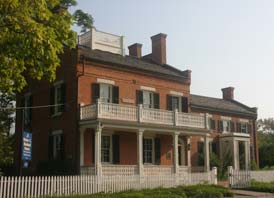
“The Heber C. Kimball Home was the inspiration for the restoration of Nauvoo…Heber, his wife Vilate, and their three children arrived in Nauvoo with almost nothing, having lost virtually everything they owned in Missouri. Heber dismantled an old stable to make a crude lean-to for his family. He built two log homes before finally completing this brick home.”
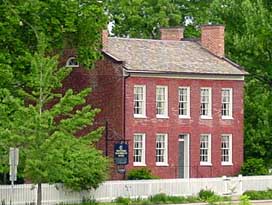
“When Wilford built this lovely home, he wanted it to be warm and cozy. Consequently, he put a fireplace in every room, eight in all. He secured bricks, made in Nauvoo, by bartering and using what little money he had, and by doing much of his own work. He recorded in his journal, “I went to a brick kiln and flung out 7,000 bricks, nearly melting myself.” “
“To the Latter-day Saints, brick homes and shops meant beauty and permanence. There were seven brickyards in Nauvoo in the 1840s, five of them on the bluff and two more on the flats. Those seven brickyards were capable of producing four million bricks in a single season. The three ingredients needed for making bricks, clay containing iron oxide, sand, and water, were all readily available here in Nauvoo.
Many early settlers lived for years in log cabins while they built their brick homes, only to enjoy them for a few short months before they left to begin their trek westward. Nauvoo boasted 350 brick buildings before the Saints left in 1846. Of these, 49 were still standing in the 1960s when the restoration of Nauvoo began. Many of these, including the homes of Brigham Young, John Taylor, Wilford Woodruff and Heber C. Kimball, have been restored and made available for public viewing.” http://www.historicnauvoo.net/2010/01/brickyard/
Prior to their persecution by mobs, they had become a very prosperous society with shops, halls, wide streets, brick homes where at the time frontiersmen and women lived in humble log homes. And regarding their prior attempt to redeem Zion at Kirtland:
“The temple… site had been dedicated more than two years earlier… Beyond laying out stones and logs to mark the foundation site, however, the saints in Zion made no effort to build the temple that would have protected them in times of trial. Instead, they attempted to establish Zion without building a temple, and they put their resources into other enterprises instead. This led first to arguing, then to laziness, and then to breaking the commandments (see v. 50). At that point, the Lord allowed the mobs to descend upon them, first in July and then again in November 1833, and the Missouri Saints, whose watchmen were seemingly asleep on duty (see v. 53), found themselves defenseless and unprepared. (Stephen E. Robinson, H. Dean Garrett, A Commentary on the Doctrine and Covenants, [Salt Lake City: Deseret Book Co., 2001] 3:277)
The church membership was fulfilling the parable the Lord had given them earlier that decade. Because of their slothfulness to complete the tower in the prescribed time period (D&C 124:31-32), the Lord had returned “their iniquities upon their own heads,” as He had prophecied to the Nephites and Lamanites at Bountiful. When Joseph and Hyrum Smith were killed, the temple was not half completed. Thereafter, setback after setback, persecution after persecution caused the saints to finish the temple one section at a time. But as Moses was taken from the Israelites, so too was Joseph taken from the saints, and with him the opportunity for the saints to receive the fullness of the priesthood and establish Zion as Enoch had successfully done. Mobs had overrun Nauvoo and and the temple suffered fire after fire, disaster after disaster until finally, May 27, 1850, A tornado struck, and debris fell around workers who were repairing the walls of the temple. The St. Louis–based Daily Missouri Republican recorded, “This frightful hurricane, the most terrible experienced in the country in many years, burst suddenly on the hill of Nauvoo, where lightnings, thunder, wind, hail and rain, seemed united to assail the building.” — 27 May 1850, quoted in Don F. Colvin, The Nauvoo Temple: A Story of Faith (2002), 270.
After one hundred seventy years, we latter-day saints are as worldly as the early saints were. Isaiah looked most unfavorably at us. The Book of Mormon was written specifically for us so that we would not make the same mistakes that previous covenant peoples did. And for this reason, we have been under condemnation since 1832 (D&C 84:54-58).
Said Hugh Nibley: “Elders of Israel are greedy after the things of this world. If you ask them if they are ready to build up the kingdom of God, their answer is prompt–“Why, to be sure we are, with our whole souls; but we want first to get so much gold, speculate and get rich, and then we can help the church considerably. We will go to California and get gold, go and buy goods and get rich, trade with the emigrants, build a mill, make a farm, get a large herd of cattle, and then we can do a great deal for Israel.
I have heard this many times from friends and relatives, but it is hokum. What they are saying is, “If God will give me a million dollars, I will let him have a generous cut of it.” And so they pray and speculate and expect the Lord to come through for them. He won’t do it: “And again, I command thee that thou shalt not covet thine own property” (D&C 19:26). “Let them repent of all their sins, and of all their covetous desires, before me, saith the Lord; for what is property unto me? saith the Lord” (D&C 117:4). He does not need our property or our help.
Every rhetorician knows that his most effective weapons by far are labels. He can demolish the opposition with simple and devastating labels such as communism, socialism, or atheism, popery, militarism, or Mormonism, or give his clients’ worst crimes a religious glow with noble labels such as integrity, old-fashioned honesty, tough-mindedness, or free competitive enterprise. “You can get away with anything if you just wave the flag,” a business partner of my father once told me. He called that patriotism. But the label game reaches its all-time peak of skill and effrontery in the Madison Avenue master stroke of pasting the lovely label of Zion on all the most typical institutions of Babylon: Zion’s Loans, Zion’s Real Estate, Zion’s Used Cars, Zion’s Jewelry, Zion’s Supermart, Zion’s Auto Wrecking, Zion’s Outdoor Advertising, Zion’s Gunshop, Zion’s Land and Mining, Zion’s Development, Zion’s Securities–all that is quintessentially Babylon now masquerades as Zion.” — “What Is Zion? A Distant View” in Sunstone 13 (April 1989):20-32
The remainder of the parable, or in other words, the redemption of Zion is yet to come. But will it happen before the Lord pours out his judgment upon the Gentiles as prophecied by Isaiah? Perhaps the Gentiles will repent. But that is a topic for another day.
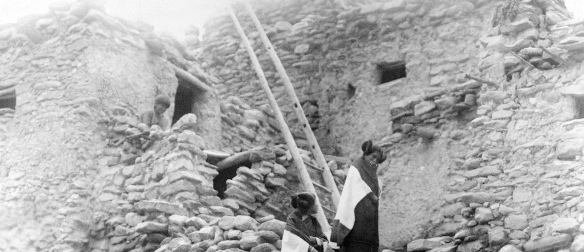
 Latter-day Lamanite