
• About

Latter-day Lamanite

Latter-day Lamanite

Tag Archives: Lehi

A Gold Kaleidoscope

25 Sunday Jan 2026

Posted by latterdaylamanite in Heritage

≈ Leave a comment

Tags

Bible, christianity, faith, god, Isaiah, Jesus, Jesus Christ, Joseph Smith, Kaleidoscope, Knowledge, Lehi, Nephi, Partake, Rest, Taste, The Book of Mormon

I was asked to speak in church today about the Book of Mormon. This was my message:

What happens when a microscope and a telescope run into each other? They kaleidoscope!

A kaleidoscope has three main components:

1. Mirrors: Usually three long mirrors arranged in a triangular tube. Their reflections create repeating, symmetrical patterns.

2. An Object chamber: which is a small compartment at one end containing loose, colored pieces of glass, beads, or crystals.

3. A Viewing tube or eyepiece: This is the tube you look through, which aligns your eye with the mirrors.

When you rotate the kaleidoscope, the objects in the chamber shift and move around. Light enters, reflects multiple times between the mirrors, and produces constantly changing, symmetrical geometric patterns.

The scriptures are like a priceless gold kaleidoscope, but one with diamonds, rubies, emeralds, and sapphires instead of pieces of cheap glass or beads in the chamber. As we focus on these precious stones and study them from all the angles provided by the mirrors, we find that the scriptures contain their own symmetrical patterns. These common recurring themes, symbols, and motifs create a unified narrative. But this also relies on the principles of light reflection without which we could not see all the details and colors and shapes through the eye piece. It is the light and also the love of Christ within us that enable us to appreciate the intricate patterns and themes of the scriptures so that we are empowered to draw ever closer to Him. This brings me to the Book of Mormon and what I consider two paramount themes:

1. Developing a very personal and intimate relationship with Jesus Christ.

2. Understanding Jesus Christ’s relationship with us as a whole.

Joseph Smith declared that the Book of Mormon was the most correct of any book on earth, and the keystone of our religion, and a man would get nearer to God by abiding by its precepts, than by any other book.

He also said that God hath not revealed anything to Joseph, but what he will make known unto the Twelve, and even the least Saint may know all things as fast as he (or she) is able to bear them.

This brings me now to what I want to focus on, which is one particular passage in the Book of Mormon in an attempt to reveal some facets in one of the precious stones in our gold kaleidoscope, and hopefully in a new and unique light.

These are Nephi’s final words to the world:

2 Nephi 33:13 And now, my beloved brethren, all those who are of the house of Israel, and all ye ends of the earth, I speak unto you as the voice of one crying from the dust: Farewell until that great day shall come.

14 And you that will not partake of the goodness of God, and respect the words of the Jews, and also my words, and the words which shall proceed forth out of the mouth of the Lamb of God, behold, I bid you an everlasting farewell, for these words shall condemn you at the last day.

Here, Nephi is addressing everyone who prefers not to partake of the goodness of God. They have “better things to do” with their busy lives. So, what does it mean to partake of God’s goodness? Well, throughout the scriptures, there are some key words that are synonymous with one another. They are partake, taste, fruit, goodness, rest, and salvation, to name a few. These are all code words which describe experiencing God’s presence and immense love. In this context, the words partake and taste are used about fifty times in the Book of Mormon. Some examples are:

1 Nephi 8:11 And it came to pass that I did go forth and partake of the fruit thereof; and I beheld that it was most sweet, above all that I ever before tasted. Yea, and I beheld that the fruit thereof was white, to exceed all the whiteness that I had ever seen.

12 And as I partook of the fruit thereof it filled my soul with exceedingly great joy…

Book of Mormon prophets hereafter drew upon the imagery of Lehi’s dream because they experienced the same.

Jacob 1:7 Wherefore we labored diligently among our people, that we might persuade them to come unto Christ, and partake of the goodness of God, that they might enter into his rest

(We’ll need to come back and address the meaning of the word rest).

Alma 36:26 For because of the word which he has imparted unto me, behold, many have been born of God, and have tasted as I have tasted, and have seen eye to eye as I have seen; therefore they do know of these things of which I have spoken, as I do know; and the knowledge which I have is of God.

The words know and knowledge are covenant terms. Adam knew Eve just as the brother of Jared knew Jesus Christ. He had faith no longer for it was replaced with knowledge.

4 Nephi 1:3 And they had all things common among them; therefore there were not rich and poor, bond and free, but they were all made free, and partakers of the heavenly gift.

Mormon 1:15 And I, being fifteen years of age and being somewhat of a sober mind, therefore I was visited of the Lord, and tasted and knew of the goodness of Jesus.

As I have read in just these few verses, when you taste of the goodness of Jesus Christ, then you will see eye to eye. Why? Because like Lehi, Nephi, the brother of Jared and others, you will have faith no longer because the finisher of your faith who is Jesus Christ will have opened unto you, giving you knowledge. Speaking of rest, let’s read a couple more important passages.

Moroni 7:3 Wherefore, I would speak unto you that are of the church, that are the peaceable followers of Christ, and that have obtained a sufficient hope by which ye can enter into the rest of the Lord, from this time henceforth until ye shall rest with him in heaven.

D&C 84:21 And without the ordinances thereof, and the authority of the priesthood, the power of godliness is not manifest unto men in the flesh;

22 For without this no man can see the face of God, even the Father, and live.

23 Now this Moses plainly taught to the children of Israel in the wilderness, and sought diligently to sanctify his people that they might behold the face of God;

24 But they hardened their hearts and could not endure his presence; therefore, the Lord in his wrath, for his anger was kindled against them, swore that they should not enter into his rest while in the wilderness, which rest is the fulness of his glory.

There are so many more passages throughout the scriptures and key words illustrating what Nephi was talking about when referring to “partaking of the goodness of God.” Or as Jesus declared in the Doctrine and Covenants:

D&C 88:68 Therefore, sanctify yourselves that your minds become single to God, and the days will come that you shall see him; for he will unveil his face unto you, and it shall be in his own time, and in his own way, and according to his own will.

The apostle Peter used the same key words in the New Testament when exhorting us to make our calling and election sure. Then as Joseph Smith once taught, we may receive the Other Comforter who is Jesus Christ Himself.

In the Lectures on Faith, Joseph Smith wrote: How do men obtain a knowledge of the glory of God, his perfections and attributes? Answer: By devoting themselves to his service, through prayer and supplication incessantly, strengthening their faith in him, until like Enoch, the brother of Jared, and Moses, they obtain a manifestation of God to themselves.

Nephi explicitly told us that if we prefer not to undertake these things, he bade us an everlasting farewell. But not only this, Nephi also explicitly warned us to respect the words of the Jews, his words, and also the words of Jesus Christ. To respect in this context means to honor and to value the authority of, and in this case, Nephi’s authority, for as he wrote in his final verse:

2 Nephi 33:15 For what I seal on earth, shall be brought against you at the judgment bar; for thus hath the Lord commanded me, and I must obey. Amen.

I only have a few minutes left to expound on what Nephi wanted us to honor and to value. He knew that we would have the words of the Jews and also Jesus. He meticulously wove specific chunks of Isaiah’s writings into his message because there were great things that he was forbidden to reveal to us. But by including certain Isaiah concepts, he could lawfully convey to us the things we would face in the end times. There are many sequential events that will happen just before the great day of the Lord’s second coming and Nephi codified them in his inclusion of Isaiah’s words.

Most of Jesus Christ’s teachings at Bountiful revolved around Isaiah’s end-time prophecies, but the people were too weak in understanding what He was saying so He commanded them to go home and ponder His words. Now, if you want a cheat sheet of many of these sequential end-time events, they can be found in 3 Nephi chapters twenty through twenty-two, but I recommend beginning with around chapter fifteen or sixteen after he teaches His sermon on the mount. In these chapters, Jesus tells the people at Bountiful and us in the end times what to expect. He then gave us an explicit commandment:

3 Nephi 23:1 And now, behold, I say unto you, that ye ought to search these things. Yea, a commandment I give unto you that ye search these things diligently; for great are the words of Isaiah.
2 For surely he spake as touching all things concerning my people which are of the house of Israel; therefore it must needs be that he must speak also to the Gentiles.
3 And all things that he spake have been and shall be, even according to the words which he spake.

To reiterate, there are many great and marvelous things that will yet happen, including gentile kings and queens participating in the physical gathering of the exiled tribes of Israel to their lands of inheritances. Another great and marvelous event will be when all things are revealed to us. And they are written down in plates that are still sealed and waiting for us to become clean and worthy. Jesus Christ also talked about this at Bountiful after expounding Isaiah’s words:

3 Nephi 26:6 And now there cannot be written in this book even a hundredth part of the things which Jesus did truly teach unto the people…

9 And when they (meaning us) shall have received this, which is expedient that they should have first, to try their faith, and if it shall so be that they shall believe these things then shall the greater things be made manifest unto them.

10 And if it so be that they will not believe these things, then shall the greater things be withheld from them, unto their condemnation.

11 Behold, I was about to write them, all which were engraven upon the plates of Nephi, but the Lord forbade it, saying: I will try the faith of my people.

To believe in the words of Nephi and the words of Jesus and the words of Isaiah is to understand them. If we do not yet understand them as the people at Bountiful didn’t understand them, are we really respecting their words as Nephi exhorts? Do we honor and value them? I will conclude by reading one of Moroni’s editorials and Jesus Christ’s declaration in Ether chapter four:

Ether 4:4 Behold, I have written upon these plates the very things which the brother of Jared saw; and there never were greater things made manifest than those which were made manifest unto the brother of Jared…

6 For the Lord said unto me: They shall not go forth unto the Gentiles until the day that they shall repent of their iniquity, and become clean before the Lord.

7 And in that day that they shall exercise faith in me, saith the Lord, even as the brother of Jared did, that they may become sanctified in me, then will I manifest unto them the things which the brother of Jared saw, even to the unfolding unto them all my revelations, saith Jesus Christ, the Son of God, the Father of the heavens and of the earth, and all things that in them are…

13 Come unto me, O ye Gentiles, and I will show unto you the greater things, the knowledge which is hid up because of unbelief.

14 Come unto me, O ye house of Israel, and it shall be made manifest unto you how great things the Father hath laid up for you, from the foundation of the world; and it hath not come unto you, because of unbelief.

15 Behold, when ye shall rend that veil of unbelief which doth cause you to remain in your awful state of wickedness, and hardness of heart, and blindness of mind, then shall the great and marvelous things which have been hid up from the foundation of the world from you—yea, when ye shall call upon the Father in my name, with a broken heart and a contrite spirit, then shall ye know that the Father hath remembered the covenant which he made unto your fathers, O house of Israel.

Brothers and sisters, Nephi was speaking to us. Isaiah the end-time prophet was speaking to us. Jesus was speaking to us. Their words are like the beautiful colors and patterns of the diamonds and rubies and emeralds and sapphires in our gold kaleidoscope. We have been offered a heavenly gift. I pray that many of us if not all, will kindle or rekindle the desire to partake of the goodness of Jesus Christ and respect the words of the prophets in the Book of Mormon unto the rending of the veil of unbelief in our lives.

The Man Dressed In A White Robe Reconsidered

15 Monday Apr 2024

Posted by latterdaylamanite in Heritage

≈ 1 Comment

Tags

Book of Mormon, Condescension, DescentPhase, faith, god, Jesus Christ, LecturesOnFaith, Lehi, ManDressedInAWhiteRobe, Nephi, TreeOfLife

I had not planned to share this for a long time, but the subject was broached today by an acquaintance, so I will explain why I have reconsidered what I wrote in a previous entry over a year ago.

I’ve been outspoken about that for a while in some circles, but I have also reconsidered who the man dressed in a white robe in Lehi’s dream was, based on personal experience and also with a conversation I had with a true messenger. Lehi and those like him such as Isaiah who have “ascended” to a new level of ministration are “exalted” to their new level by the Lord after experiencing a “descent” phase or a period of “abasement.” Consider a few things: Lehi had already experienced a theophany which is beyond the iron rod imagery or in other words at the “end” to which people should endure. He had already partaken of the fruit and found “rest.” I have made many videos about this “rest” and “partaking of God’s goodness” if anyone is interested in watching my Book of Mormon Spotlight videos on YouTube. We see this powerfully, but very briefly in 1 Nephi chapter 1 with Lehi’s theophany. Later, the opening scene of Lehi’s dream of the tree of life in 1 Nephi chapter 8 placed him in a lone and dreary wilderness where the white robed man asked Lehi to follow him. Lehi followed him until he found himself no longer in a dark wilderness but rather in a dark waste. Lehi essentially experienced a descent phase, or in other words, a condescension. It happened upon his consent to be guided there. Once his “abasement” period was completed, his ministration as one who then “ascended” like Isaiah to guide others to partake of the same “rest” began. And it began with Lehi guiding his family along the same path. This is why Lehi did not start out at the beginning of the iron rod in his dream, but the others did. Very few people press forward during their mortal lives with their minds and hearts set on partaking of the fruit of the tree of life, or “rest” while yet in mortality. Those that do may consent to a period of abasement or a “descent” phase where they demonstrate their willingness to serve God at all hazards (6th lecture on faith), not even withholding their lives as Lehi demonstrated when he preached repentance at Jerusalem.

Lecture on Faith 6:5 For a man to lay down his all, his character and reputation, his honor and applause, his good name among men, his houses, his lands, his brothers and sisters, his wife and children, and even his own life also, counting all things but filth and dross for the excellency of the knowledge of Jesus Christ, requires more than mere belief, or supposition that he is doing the will of God, but actual knowledge: realizing, that when these sufferings are ended he will enter into eternal rest; and be a partaker of the glory of God…

Or as the Lord asked:

Isaiah 6:8 Also I heard the voice of the Lord, saying, Whom shall I send, and who will go for us? Then said I, Here am I; send me.

The Man Dressed In A White Robe

09 Thursday Feb 2023

Posted by latterdaylamanite in Heritage

≈ 1 Comment

Tags

arm of flesh, Lehi, white robe

For ten years I have had discussions with many different people about the man “dressed in a white robe” in Lehi’s vision recorded in 1 Nephi chapter 8. Some firmly believe that he was an angel or a true messenger from the Lord. Others believe that he was just a man. Lehi chose to follow this man and ended up walking through darkness for many hours until he finally decided to pray to God for help. What do we know of this man? We know only two things:

1. He was a man.
2. He was dressed in a white robe.

Lehi’s vision initially placed him in a dark and dreary wilderness. After he decided to follow this man, he discovered that he had been led into a dark and dreary waste and there is no more mention of this man. Finally after many hours of traveling in the darkness, he prayed for mercy. It wasn’t until after he prayed that he beheld an enormous field with a very special tree in the field whose fruit was “desirable to make one happy.”

But this was not Lehi’s first vision. In the very first few verses of the very first chapter of the Book of Mormon we read about Lehi’s vision where he sees God sitting on His throne and then he sees One descending whose “luster was above that of the sun at noon-day..” Then twelve others follow Him and “and their brightness did exceed that of the stars in the firmament.”

But the man who asked Lehi to follow him in his second vision of the tree of life had no glory or brightness to speak of, yet Lehi chose to follow him. The most elect of God’s people are also willing to and readily follow men who dress in white without question just as Lehi followed this man who had no glory or brightness. There is no shortage of men (and women) in this world who desire that anyone and everyone follow them with mottos and promises of rewards. There are many gospels of success and prosperity for the right price. Satan himself may be transformed as an angel of light ready to deceive anybody willing to pay attention. Korihor was deceived by Satan who had appeared to him in the form of an angel. In the Pearl of Great Price, however, when Satan appeared to Moses in chapter one, Moses could tell that he had no glory to speak of, unlike God who had just spoken to him while His glory was upon Moses, so Moses could discern the difference and had the presence of mind to reject Satan.

Some readers of the Book of Mormon might think it should have been important enough to God to make this man dressed in white identifiable (Nephi in another vision identified a different man in a white robe as John but this is another discussion). But I consider the anonymity of the man dressed in a white robe in Lehi’s vision an important feature and not a fault of the vision and its intended message. We must learn by sad experience never to trust in the arm of flesh as one Old Testament Prophet did which resulted in his tragic death. Sometimes such a lack of discernment can be fatal. Oftentimes it leads to bruised egos and also humbled hearts as with Lehi who had become lost in a dark and dreary waste.

Most believers have a shallow understanding of the scriptures and the powerful lessons they teach. We are given those lessons so that we may be wiser than they were and not make the same mistakes that they did. One of the most important lessons is to trust your own connection to God. Trust the Holy Ghost which you should have received if you were baptized.

D&C 45:56 And at that day, when I shall come in my glory, shall the parable be fulfilled which I spake concerning the ten virgins.

57 For they that are wise and have received the truth, and have taken the Holy Spirit for their guide, and have not been deceived—verily I say unto you, they shall not be hewn down and cast into the fire, but shall abide the day.

If you do not have more than a superficial understanding of the scriptures or the breadth and depth of knowledge and wisdom which they impart, it is incumbent upon you to study them in order to know how Satan operates in all his subtlety. But more importantly, studying and pondering them deeply and doing what God has taught and commanded brings you in harmony with Him. And if you are attuned to His voice, you will know when any man dressed in white, though well intentioned he might be, is leading you–whether naively or deliberately–from the dark wilderness you now occupy into a dark waste.


Great Are the Words of Isaiah

19 Wednesday Feb 2020

Posted by latterdaylamanite in Heritage

≈ 2 Comments

Tags

Assyria, Babylon, Gomorrah, idolatry, Idols, Isaiah, Israel, Jesus Christ, Lehi, Lot, Nephi, Sodom, Zion

It was about 2012 when I decided to make a serious study of the book of Isaiah in the Old Testament and for about two years, I focused on this book alone.

3 Nephi 23:1 And now, behold, I say unto you, that ye ought to search these things. Yea, a commandment I give unto you that ye search these things diligently; for great are the words of Isaiah.
2 For surely he spake as touching all things concerning my people which are of the house of Israel; therefore it must needs be that he must speak also to the Gentiles.
3 And all things that he spake have been and shall be, even according to the words which he spake.

Those are the very words out of the mouth of our Savior, Jesus Christ when He visited the people in the land Bountiful. I no longer wanted to skip over the Isaiah chapters in Second Nephi and because of my intensive studies of Isaiah’s words, I no longer wade through these Isaiah chapters with weariness, but rather, I relish reading them today.  There are four remarkable commentaries on Isaiah’s writings found in the Book of Mormon. They are given by Nephi, Jacob, Abinadi, and our Lord and Savior Jesus Christ when He visited the people at Bountiful.

(Background) In a nutshell

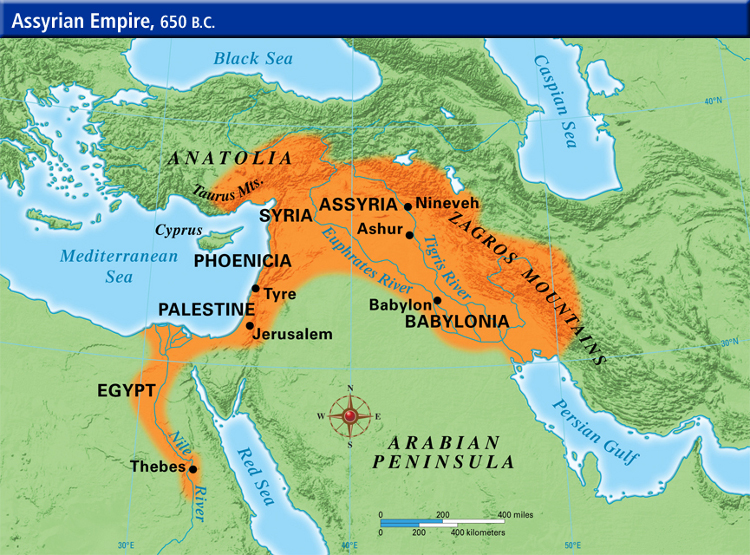
The Assyrians occupied the upper Mesopotamia. For centuries they killed and conquered nations from Egypt to Persia and built their mighty empire on their ruins. Once conquered, the enemies were brutally tortured in order to make an example of any who would rebel. Walls and stone carvings depicted images of people being skinned alive, burned to death, children being blinded before their parents and many more violent and unthinkable barbaric brutalities.

It is no wonder that Jonah fled rather than accept his divine assignment to preach repentance to them at Niniveh. But the terror of his stay inside the belly of a whale caused him to finally humble himself sufficiently to fulfill his mission. And to his amazement, they did repent. But this only lasted about forty years before they were spilling blood again.

During the height of its power, Assyria made a continuous assault on the northern kingdoms of Israel and in 721 BC, succeeded in its conquest, carrying off of to Assyria the last major segment of the Israelites. After Assyria’s fall, however, these people migrated northward and became known as the “lost tribes of Israel.”

The fall of this empire was prophecied by Isaiah, but so strong was this empire and huge and vast, was the capital of Niniveh, that people laughed and scoffed at him. Where once, Assyria was a small northern province of Babylon, it had become a super power. By the time that Lehi would have been born, Assyria would have ascended to the height of its power. But by the time Lehi had married and raising a family, the tide of history shifted. Babylon became increasingly agitated and an uprising was soon at hand.

The fact that hordes of barbarians from the north began descending to loot the mighty Assyrians enabled Egypt to break away. Then Media began to rebel. The Babylonians to the South mobilized, demanding independence. About a decade before Lehi left Jerusalem, the great battle for Ninevah was fought. All dissident factions stormed the city, breaching its might walls.

The Assyrians regrouped, setting up a temporary capital at Haran, where Abraham formerly lived and attempted to create a counter-offensive. It was at this time that Egypt’s ruler, Necho II realized that as much as he despised Assyrian rule, he hated the thought of Babylonian conquest more. He mobilized his armies up the highway along the Mediterranean coast of Palestine and found a surprise at the narrow pass near Megiddo. They found Josiah, king of Judah, commanding an army and blocking the way. Obviously the mountain kingdom of Judah did not want the Egyptians to succeed.

Necho had nothing against them because they were among Egypt’s best customers. But Necho was not about to let them stop him. He sent ambassadors to Josiah, saying, “What have I to do with thee, thou king of Judah? I come not against thee this day, but against the house wherewith I have war: for God commanded me to make hast: forebear thee from meddling with God, who is with me, that he destroy thee not.”–2 Chronicles 35:21

To make the long story short (trying to, anyway), Josiah refused and was killed in battle. This was about 609 BC and when Lehi was well on his way to achieving status as a prosperous citizen at Jerusalem. The fact that he lived down from the city in the land of his inheritance might have contributed to his safety while it is conceivable that Laban, with his “ten thousand” fought in the battle with Josiah.

The next few years war raged between Babylon and Assyria, supported by Egypt. Babylon had gained major traction when it’s king died and Nebuchadnezzar was crowned in his father’s place. In the process of mopping up and sweeping toward Egypt, Babylon swallowed up the tiny kingdom of Judah like a tiny crumb. He ordered his ministers to take some of the promising young Jews to be trained in the language, culture and governmental procedures of Babylon. One of the young men was Daniel and three other young Jewish men accompanied him. Eventually, through miraculous events, they proved themselves to be outstanding. Daniel ended up being the king’s top adviser and the others, administrators of Babylon.

What the Jews at Jerusalem did not know was that the Lord was setting up a series of circumstances, which would be most favorable to them. But the apostate king, Jehoiakim, despised the prophets. During the siege, he had to stop paying tribute to Egypt and begin paying Babylon, which he despised. Soon, though, he stopped paying tribute to Nebuchadnezzar. Before long, he was under attack and died. Nebuchadnezzar raided and looted the temple, then rounded up and carried away captive ten thousand people, including craftsmen and smiths. (See map below).

assyrianempire

With this historical background aside, here are some verses to ponder:

Isaiah 1:3 The ox knoweth his owner, and the ass his master’s crib: but Israel doth not know, my people doth not consider.
4 Ah sinful nation, a people laden with iniquity, a seed of evildoers, children that are corrupters: they have forsaken the Lord, they have provoked the Holy One of Israel unto anger, they are gone away backward…
10 ¶ Hear the word of the Lord, ye rulers of Sodom; give ear unto the law of our God, ye people of Gomorrah.
11 To what purpose is the multitude of your sacrifices unto me? saith the Lord: I am full of the burnt offerings of rams, and the fat of fed beasts; and I delight not in the blood of bullocks, or of lambs, or of he goats…
13 Bring no more vain oblations; incense is an abomination unto me; the new moons and sabbaths, the calling of assemblies, I cannot away with; it is iniquity, even the solemn meeting.

The ox and the ass are arguably the least intelligent of domesticated animals and yet they are both described as knowing their owner or master. Isaiah is speaking to a nation of idolaters. These are His children, His “covenant people.” Yet they do not know Him. The ox is a clean/kosher animal, which could be likened to the Israelites. The ass is an unclean animal and could be likened to all the gentiles (not of the ethnic lineage of Abraham). Both dumb animals know their owners and masters. Yet the Lord’s covenant people do not know Jehovah. The Master’s own covenant people are considered with a covenant curse. To “know” the Lord is a covenant relationship, but to NOT know Him is a covenant curse. In this passage, the Lord is exasperated by the vain temple ceremonies, which were supposed to teach His people how to come to know Him. The ancient temple ceremonies were supposed to keep the people of Israel in remembrance of the Savior’s coming sacrifice. Both ancient and latter-day rituals are symbolic of something else, but as such, they become stumbling blocks to those who are asleep.

As a side note, there is no graven image that is not a product of one’s hands. Idolatry results from consumer demand. The Hebrew word Abad means both to work  and worship. People worship the work of their hands. In this world, there is no economy without an exchange of products resulting from consumer demand. You can buy anything in this world with money. Mammon is the driving force behind the world’s economy. Babylon is the archetype of this system in the book of Isaiah. On the other hand, Zion does not require money. In Zion, all things are given and received freely. The Lord gave to us this earth and all things therein to be used freely and not by extortion or excess. Extortion and excess is exactly how the world operates. They take ownership of the things God has ordained for their use freely and charge a price for them. Excess is the result of one exalting oneself above another or others, thereby creating inequality in a society driven by an economy where money is the medium of exchange. In Zion, there are no rich because there are no poor because there is no money, there being no need for money. In Babylon, however, such behavior is the iniquity of a people. Idols, idolatry and commerce (economy) are all tools of Mammon.

Jehovah compares the ruling priests to Sodom and the laymen to Gomorrah. Sodom and Gomorrah set the precedent for a condemned people and so Isaiah uses it as an archetype to compare His covenant people to. They were abusers and ripe for destruction. And yet the Lord saved Lot and his family. Whenever the Lord is about to destroy a people, He tends to “gather” those few who have not forsaken Him, even by angels. Angels came to take Lot and his family out, even prodding him to leave before they destroyed the city. Likewise did the Lord bring out Lehi from Jerusalem and his family. Lot’s wife probably could not believe that her beautiful city could be destroyed. She was not attuned to the Spirit and couldn’t feel the warning to flee. Her heart was set upon the world in which she lived. So she turned around and was turned into a pillar of salt, good for nothing but to be trodden underfoot. Laman and Lemuel were the same as Lot’s wife. And so will all be whose hearts are set upon their riches–their idols.

And this is only the first half of chapter one. Chapter one is quite an indictment of the filthiness of Israel. She is a harlot whoring after her lusts, forsaking her bridegroom, who is quick to forgive and mighty to save. And though, as we read later in the chapter, though her sins be red like crimson, they shall become white as snow.

If we as disciples of Jesus Christ spend time in reflection and introspection, how do we compare to these ancient people of the Lord? We might be surprised to discover that we are just like they were.

No Samites

10 Monday Sep 2012

Posted by latterdaylamanite in Book of Mormon

≈ 5 Comments

Tags

Ishmael, ites, Laman, Lehi, Lemuel, Nephi, Sam, Zoram

After Nephi fled from his brethren with those who would follow him from the land of their first inheritance, they settled down in a place they chose to call Nephi. Two things have always stood out in my mind. The fact that Nephi had sisters and the fact that we never hear from Sam. Whether Nephi’s sisters were older and married to Ishmael’s sons, thus making this family the clear choice to bring them out of Jerusalem, or Lehi had at least two more daughters in the wilderness–or perhaps both are the case! It could well be that Nephi had older sisters married into Ishmael’s family and Lehi had at least one more daughter in the wilderness, and thus Nephi had sisters, as in plural.

Anyway, there have been commentaries on this matter for at least twenty years. One more thing that I want to mention is that I have noticed all my life how “silent” Sam is. I can’t help but feel that Sam wasn’t completely normal. He was obviously not deaf, blind or lame. He was strong and thus able to make the journey out of Jerusalem and back twice, once for the plates and once more for Ishmael’s family. Sam was intelligent and able to understand Nephi and believe all his words. His brothers had no problem smiting Nephi and Sam in the cavity of a rock after having fled Laban’s home, although the angel only acknowledged Nephi, at least according to Nephi’s account.

But we never once read about Sam commenting on anything. Sam was able to marry and have children. I, personally, can’t help but feel that Sam might have been unable to speak, as in, he might have been at the very least, mute. This is just speculation, of course but it begs the following questions: If Sam was as faithful as Nephi, then why was Sam not given the opportunity to lead or be a leader? Was he not mighty like Nephi? Why not? The only clue we have, which really isn’t much of a clue, but it does shed light on the fact that Sam was the “least of these.”

2 Nephi 4
10 And it came to pass that when my father had made an end of speaking unto them, behold, he spake unto the sons of Ishmael, yea, and even all his household.
11 And after he had made an end of speaking unto them, he spake unto Sam, saying: Blessed art thou, and thy seed; for thou shalt inherit the land like unto thy brother Nephi. And thy seed shall be numbered with his seed; and thou shalt be even like unto thy brother, and thy seed like unto his seed; and thou shalt be blessed in all thy days.

After Lehi blesses EVERYONE, even his grandchildren, he finally speaks to Sam. Rather than bless Sam according to his rank in the family, Lehi saves him for last. Lehi tells him that he is “like unto [his] brother.” Sam’s posterity becomes Nephi’s posterity. It’s just that simple. And the Book of Mormon history proved it. Nobody ever claimed to be a Samite. Many people, even wicked people claimed to be Zoramites, after Zoram who was pressed out of Jerusalem. So people hundreds and hundreds of years after Lehi, were well aware of their genealogy, but not a single Samite. Ever.

Jacob 1
12 And it came to pass that Nephi died.
13 Now the people which were not Lamanites were Nephites; nevertheless, they were called Nephites, Jacobites, Josephites, Zoramites, Lamanites, Lemuelites, and Ishmaelites.

This brings me back to my first scripture. Jacob said that “the people which were not Lamanites were Nephites; nevertheless, they were called Nephites, Jacobites, Josephites, Zoramites, Lamanites, Lemuelites, and Ishmaelites.” These were the people who went with Nephi. This means that there were indeed one or some children of Laman, maybe even Laman’s wife, as well as one or some children of Lemuel and possibly Lemuel’s wife, and some of Ishmael’s household who abandoned Laman and Lemuel in the land of their first inheritance to settle what they would call the city of Nephi. This may well have included some if not ALL of Nephi’s sisters, any of whom could have been married to Ishmael’s son. This was a very telling verse.

← Older posts

free e-book:

  • Lecturas Sobre la Fe

Recent Posts

  • A Gold Kaleidoscope
  • After All We Can Do??
  • Rome or New Jerusalem?
  • The EVERLASTING Covenant (not that everlasting covenant).
  • Billy
  • Billy
  • Looking for Life in all the Dead Places
  • A Perfect Abortion
  • Jehovah Nissi: An Ensign to the Nations
  • “I Give Unto You A Sign…”

Translate:

Archives

latterdaylamanite

latterdaylamanite

View Full Profile →

Follow Latter-day Lamanite on WordPress.com

Enter your email address to follow this blog and receive notifications of new posts by email.

Tags

Babylon Bible Book of Mormon calling and election christianity condemnation desolating sickness Ephraim faith Genealogy Gentiles god Grace Holy Ghost idolatry Indian Isaiah Israel Israelites Jesus Jesus Christ Joseph Smith Lamanite Lamanites law of consecration Lectures on Faith Lehi Love mammon Manasseh Messiah Mexican money Mormon Moses Nephi New Covenant New Jerusalem Old Testament Overflowing scourge Polynesian prayer remnant Remnant of Joseph Second Comforter Sermon on the mount temples Tree of life tribe of Joseph Zion

Blog at WordPress.com.

  • Subscribe Subscribed
    • Latter-day Lamanite
    • Join 102 other subscribers
    • Already have a WordPress.com account? Log in now.
    • Latter-day Lamanite
    • Subscribe Subscribed
    • Sign up
    • Log in
    • Report this content
    • View site in Reader
    • Manage subscriptions
    • Collapse this bar
 

Loading Comments...