
I enjoy working out in the yard and improving the garden little by little. It is also a time I get to spend a lot of conversation with the Lord and to give thanks for all the little things of the moment like butterflies, rain, or when I’m planting or picking fruits or vegetables. A lot of my time is also spent pulling weeds and keeping everything tidy, keenly aware that God allowed thorns, thistles, and weeds to grow and afflict and torment man. Goathead weeds are probably the worst and I never give them a chance to get far at all. But I don’t think I’ve ever thanked God for weeds or for afflicting me with them. I’ve been alive long enough to know better than to complain about them or anything else. God has given all things to us so that through opposition in all things we might learn to be like Him. So today I am also thankful for weeds.
But whenever things are too much for me to bear and I feel like complaining, I think about how much the early saints suffered and also Joseph Smith suffered in Liberty Jail and God’s words to him in D&C 121 and 122 wherein we read:
7 My son, peace be unto thy soul; thine adversity and thine afflictions shall be but a small moment; 8 And then, if thou endure it well, God shall exalt thee on high; thou shalt triumph over all thy foes. 9 Thy friends do stand by thee, and they shall hail thee again with warm hearts and friendly hands. 10 Thou art not yet as Job; thy friends do not contend against thee, neither charge thee with transgression, as they did Job…
5 If thou art called to pass through tribulation; if thou art in perils among false brethren; if thou art in perils among robbers; if thou art in perils by land or by sea; 6 If thou art accused with all manner of false accusations; if thine enemies fall upon thee; if they tear thee from the society of thy father and mother and brethren and sisters; and if with a drawn sword thine enemies tear thee from the bosom of thy wife, and of thine offspring, and thine elder son, although but six years of age, shall cling to thy garments, and shall say, My father, my father, why can’t you stay with us? O, my father, what are the men going to do with you? and if then he shall be thrust from thee by the sword, and thou be dragged to prison, and thine enemies prowl around thee like wolves for the blood of the lamb; 7 And if thou shouldst be cast into the pit, or into the hands of murderers, and the sentence of death passed upon thee; if thou be cast into the deep; if the billowing surge conspire against thee; if fierce winds become thine enemy; if the heavens gather blackness, and all the elements combine to hedge up the way; and above all, if the very jaws of hell shall gape open the mouth wide after thee, know thou, my son, that all these things shall give thee experience, and shall be for thy good. 8 The Son of Man hath descended below them all. Art thou greater than he?
When I think of Joseph Smith’s suffering, I then think about what a lightweight I am. Then I think about Jesus telling Joseph that he is a lightweight compared to Job. Then I think about how next to Jesus Christ, we are all infinitely less than that. Jesus Christ descended below us all that He might lift us all up to be with Him. The root word con- in condescension means with or thoroughly. And that is what Jesus did. He descended so thoroughly and with us, having suffered all things for us. He knows our pains. He knew Joseph Smith’s pains. And He knew all of Job’s pains.
So in order to understand or at least appreciate what Job went through, I spent the last week studying his life. On the surface, Job was an upright man. God even said so to Satan when Satan approached Him saying that Job only worshiped Him because He favored and protected him. God did not deny this and He even allowed Satan to afflict Job short of taking his life. A few things I noticed about Job are that he lived before Moses’ time and he was not an Israelite. He offered sacrifices by himself without a priest to give the offerings. His wealth was measured in livestock and not gold, and in the end, he gave inheritances to his daughters. The Law of Moses stipulated giving inheritances only to sons. Scholars estimate that he lived sometime after the flood and before Moses. We read that he lived 140 years after all his afflictions. This was common among the people during the time of the patriarchs, but rarely if at all among the people of Moses’ day. I think he knew a guy who knew a guy who knew a guy who worshiped the one true God. In the final chapter, he tells God “I have heard of thee by the hearing of the ear: but now mine eye seeth thee.” Abraham lived to be 175 years old so it’s very possible they were contemporaries.
Anyway, Job wasn’t under any law or covenant. He was a random and just human being who offered sacrifices and worshiped God. God even called Him blameless and upright. But because Job had only heard of God and didn’t have a relationship with Him, his view of God was very incomplete and thus warped. As an example of this warped view, we read in chapter one how his sons and daughters had spent a lot of time together feasting and drinking. After they were all done, Job got up very early one morning to offer burnt offerings according to the number of his children just in case they had sinned by cursing God in their drunkenness. Reading between the lines throughout the book reveals Job to be a “works” oriented worshiper who was “working the system.” Grace was obviously a foreign concept to him. But God did not allow Satan to afflict Job as a punishment even though Satan insisted that Job’s true colors would be revealed by taking away all that he was blessed with. It is important to understand that while Job suffered unbearable trials, he was not on trial. As a matter of fact, the Book of Job is not about Job so much as it is about God and His own wisdom. It is also not about suffering as much as it is about how to think about God while we are suffering. You see, to Job, God was a divine Genie. He was a cosmic vending machine. Burnt offerings equaled blessings. Being upright and blameless equaled wealth. And Job owned thousands of sheep, thousands of camels, hundreds of yokes of oxen, and hundreds of she asses. He was the greatest man in the East of his time. Then Satan came along and took it all in one day. And thirty-something chapters are devoted to Job’s emotional roller coaster. His own wife told him to curse God and die. This is another example of appealing to the cosmic vending machine. But although Job did not curse God with his lips, he still demanded that God judge him if he did something wrong. In chapter 29 Job lists all his works to justify himself and in chapter 31, he declares that he’s done nothing wrong. He then welcomes punishment for anything he did wrong. But God had already acknowledged Job’s righteousness to Satan and although God finally does answer Job, He does not tell him about His conversation with Satan or why He allowed Satan to afflict Him. Instead, God gives Job a virtual tour of the universe and shows Job all the details of His creations.
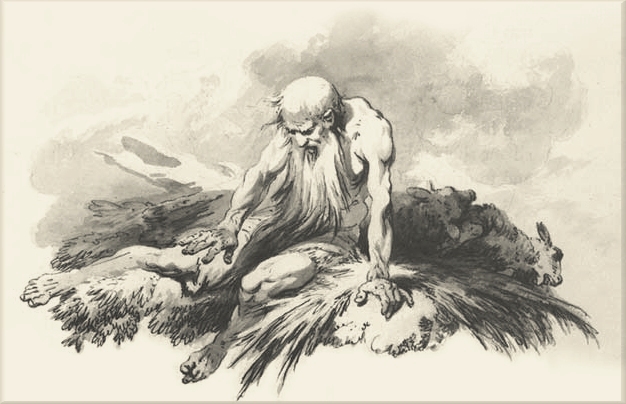
The point of all this hearkens back to Job’s assumption that God is not just, neither is God capable of running the world according to justice. Job and his so-called friends believed that they had a broad enough perspective on life to make such a claim about how God ought to run the world. God uses this virtual tour to deconstruct for Job all of his assumptions. He shows Job how vast and complex the universe is and that He has his eyes on all of it down to every tiny detail. God then demands Job tell him if he thinks he is capable of micro-managing all of creation. He asks Job if his arm is mighty or can thunder with his voice and dispense justice to all of creation from moment to moment. He tells Job that if he can do all these glorious things and more, then will God confess that Job’s own right arm can save himself. God then describes two fantastic beasts called Behemoth and Leviathan and how great and wondrous they are. He then asks Job if he is able to play with one as a man plays with a bird. But even they are His and all things are God’s. After this virtual tour, Job is deeply humbled and acknowledges how tiny his perspective is and just how ignorant he is of the vast scope of God’s creation. He had only known about God because he had heard about him, but now he was able to see with his own eyes. Job then abhorred himself and repented in dust and ashes. Moses had a similar experience, and though at one time Moses was an exalted prince of Egypt, yet at another time after being given a virtual tour of the universe, exclaimed man is nothing.
Job never did learn why he suffered. But what he did learn was to develop a relationship with God. God then restored to Job double everything he had lost, but it was not as some kind of reward. Remember that Job did nothing wrong to begin with so all his suffering was not the result of any punishment. In God’s own wisdom, He apparently simply decided to give all these things to Job as a gift. What I have learned from the Book of Job is that God is not a magic genie who you can appeal to with burnt offerings in exchange for favors and blessings. God wanted Job to wrestle with him and to get to know Him. He wanted to have a relationship with Job. Before this experiment, Job was not relying on a relationship where he was walking with God, but rather relying on the sacrifices that he was offering up. He was relying on his own works and his own character. He was a blameless man and he had the list of deeds and attributes to prove it. God had even acknowledged it.
But this is the difference between relationship and religion. The Jews claimed Abraham as their father, but Jesus told them that God could raise children out of stones for Abraham. But God doesn’t want stones or dutiful robots who flawlessly perform their offerings. God wants a family. And He wants a relationship with each of us as His family. That is why Jesus came to die for us. It is because He loves us. But he doesn’t owe any of this to us. He owes us nothing. It is because of the love and the grace that He is filled with that motivates Him to manage the universe for us. We are His work and His glory. The lesson of the Book of Job is to mind your motives.
With religion, we get dutiful people like the Jews in the Bible who had no relationship with God. They made their offerings and relied on them for their righteousness just like Job did. The Jews knew better though and it is one reason why Jesus gave to them the parable of the prodigal son. But we tend to think that the parable was all about the wayward hedonist son who spent all his inheritance recklessly in a foreign land. But let’s look at the other moralist son’s attitude. In Luke chapter 15 we read:
25 Now his elder son was in the field: and as he came and drew nigh to the house, he heard musick and dancing.
26 And he called one of the servants, and asked what these things meant.
27 And he said unto him, Thy brother is come; and thy father hath killed the fatted calf, because he hath received him safe and sound.
28 And he was angry, and would not go in: therefore came his father out, and entreated him.
29 And he answering said to his father, Lo, these many years do I serve thee, neither transgressed I at any time thy commandment: and yet thou never gavest me a kid, that I might make merry with my friends:
30 But as soon as this thy son was come, which hath devoured thy living with harlots, thou hast killed for him the fatted calf.
While the younger son had rebelled against God by going out to live the life of a hedonist, the elder son rebelled as a moralist. He doesn’t go into the house to be with his father and his penitent brother. Instead, he goes out—not into the world—but out into the field of his own works. He goes to where he has built his own identity which is what he thinks he is in God’s eyes. When his father comes out all he can think about is all he has done for his father and in return, his father never gave him anything. He essentially challenges his father to realize how good of a son he is and how much more deserving he is than his younger brother. You see, it’s all about him. He is using God to get all the things he wants and what he thinks he has earned rather than using the things he has to love God. In the parable, both sons were selfish, but only one was depicted as having seen the error of his hedonist ways. The elder son is never depicted as having seen the error of his moralist way and that is how Jesus left it, though, in the parable, the father graciously told him, “all that I have is thine.” The parable teaches us then about how gracious God is toward both the hedonist and the moralist. But the scriptures show us example after example of the blindness of the moralist who thinks to himself, “look at all my good works and attributes.” I am not like the hedonist sinners. That is exactly how the Pharisees behaved. The ones who don’t see themselves as lost but believe they have earned grace and blessings are in far more danger of being lost themselves.
C.S. Lewis once said, “Prostitutes are in no danger of finding their present life so satisfactory that they cannot turn to God: the proud, the avaricious, the self-righteous, are in that danger.”
When the Pharisees were offended by some of Jesus Christ’s teachings, he said, “let them alone. They be blind leaders of the blind. And if the blind lead the blind, both shall fall into the ditch.” Jesus didn’t even attempt to reclaim those who were so self-absorbed. He went after the sinners and sat and ate with them instead. This is why minding our motives is important and why Job’s life story should be deeply considered. When Lehi was given a promised land and had taken his family into the wilderness, he offered up burnt offerings of thanks. Lehi and his family were about to endure great trials and Lehi gave thanks. When his sons returned with the plates, again Lehi offered sacrifice and burnt offerings, giving thanks. When Ishmael and his family returned to the wilderness with Nephi and his brothers, again, Lehi gave thanks and offer sacrifice and burnt offerings.
Giving thanks is a good motive that allows us to be humble and trusting of God’s wisdom in our lives. It enables us to suffer hardships and trials, all of which are custom-designed to make us stronger, to make us humble, to make us meek, to make us all the things that Jesus Christ is. Everybody wants to go to heaven, but who wants to die? To follow Jesus is to take up our crosses and die to ourselves so that we can become alive in Him. Everybody wants to enter Zion, but who is willing to suffer for Christ’s sake?
Here is the story of the Silversmith: “And he shall sit as a refiner and purifier of silver” (Mal. 3:3). This puzzled a Bible study group. One of the members offered to learn about the process of refining silver and inform them at their next study. He visited a silversmith and watched him at work. He watched the silversmith hold a piece of silver over the fire and let it heat up. The silversmith explained that in refining silver, you must hold the silver in the middle of the fire where the flames were hottest to burn away all the impurities. The member then thought about God holding us where the flames are the hottest to burn away our impurities. Then he thought again about the verse. “And he shall sit as a refiner and purifier of silver.” He asked the silversmith if it was true that he had to sit there in front of the fire and watch the process at all times. The silversmith answered that not only did he have to sit there holding the silver, but he had to keep his eyes on the silver the entire time it was tested in the fire. If the silver was left a moment too long in the flames, it would be destroyed. You must leave it long enough to serve the purpose, but not too long as it would destroy it. The member was silent for a moment. Then asked the silversmith, “How do you know when silver is fully refined?” He smiled and answered, “Oh, that’s easy — when I see my image in it.” (Author Unknown). When we are feeling the heat of the fire, remember that God has his eye on us and He will “sit as a refiner and purifier” keeping watch until He sees His image in each of us. God is intimately aware of our needs and limits. He also knows just when you have had enough. So let us be grateful for His perfect wisdom and praise Him as we endure the fire, and not complain or cry “why is this happening to me?” And as we are being refined, are we doing what God wants us to do of our own volition and out of love? Or are we waiting to receive a calling or an assignment? Are we anxiously engaged in many good causes or are we compelled to do His will? In D&C 58 we read:
26 For behold, it is not meet that I should command in all things; for he that is compelled in all things, the same is a slothful and not a wise servant; wherefore he receiveth no reward.
27 Verily I say, men should be anxiously engaged in a good cause, and do many things of their own free will, and bring to pass much righteousness;
28 For the power is in them, wherein they are agents unto themselves. And inasmuch as men do good they shall in nowise lose their reward.
29 But he that doeth not anything until he is commanded, and receiveth a commandment with doubtful heart, and keepeth it with slothfulness, the same is damned.
Now here’s the parable of the laborers in the vineyard in Matthew chapter 20:
1 For the kingdom of heaven is like unto a man that is an householder, which went out early in the morning to hire labourers into his vineyard.
2 And when he had agreed with the labourers for a penny a day, he sent them into his vineyard.
3 And he went out about the third hour, and saw others standing idle in the marketplace,
4 And said unto them; Go ye also into the vineyard, and whatsoever is right I will give you. And they went their way.
5 Again he went out about the sixth and ninth hour, and did likewise.
6 And about the eleventh hour he went out, and found others standing idle, and saith unto them, Why stand ye here all the day idle?
7 They say unto him, Because no man hath hired us. He saith unto them, Go ye also into the vineyard; and whatsoever is right, that shall ye receive.
8 So when even was come, the lord of the vineyard saith unto his steward, Call the labourers, and give them their hire, beginning from the last unto the first.
9 And when they came that were hired about the eleventh hour, they received every man a penny.
10 But when the first came, they supposed that they should have received more; and they likewise received every man a penny.
11 And when they had received it, they murmured against the goodman of the house,
12 Saying, These last have wrought but one hour, and thou hast made them equal unto us, which have borne the burden and heat of the day.
13 But he answered one of them, and said, Friend, I do thee no wrong: didst not thou agree with me for a penny?
14 Take that thine is, and go thy way: I will give unto this last, even as unto thee.
15 Is it not lawful for me to do what I will with mine own? Is thine eye evil, because I am good?
16 So the last shall be first, and the first last: for many be called, but few chosen.
Here again, we read about people with their own worldview of justice and good works. Those who had worked the longest felt robbed because the idle laborers who were hired at the last hour received the same pay. They were motivated by their own reward rather than God’s glory to give to them the gift of eternal life. This parable was a direct answer to Peter’s question and an example of the philosophy of the Jewish rulers of the time. They believed that they earned rewards in the kingdom of heaven through their labors on the earth and that the greater the labor, the greater the reward. This belief overlooked some of the factors in the equation, including that of the grace of God. The Lord did not want this concept to carry over into the teachings of the gospel, and through this parable, he essentially declared that “he may do his work well, but he honors me less than others who trust in me without thinking of future gain.” This parable was a warning that the spirit in which one labors for the kingdom is what gives the service its value. This is why in the allegory of the olive trees in Jacob 5, the servants are few. If we are willing to suffer all the things that God sees fit to inflict upon us and if we do it because we love Him and because we are grateful for His infinite atonement, then we will find joy in the things we suffer because we will find ourselves yoked with Him whose burden is light. The burdens of the world are heavy and miserable. If we allow ourselves to be burdened by worldly cares and values, then we are suffering needlessly. Material wealth and goods will all perish. They have no value. But there is great value in suffering with gratitude in our hearts because when God pours out his love and His Spirit into us until we are brimming and bursting, we can likewise pour out this love upon others whose vessels may not be full. And they will rejoice as they begin to brim and burst with gratitude for God’s love.
When upon life’s billows you are tempest-tossed, When you are discouraged, thinking all is lost, Count your many blessings; name them one by one, And it will surprise you what the Lord has done. Are you ever burdened with a load of care? Does the cross seem heavy you are called to bear? Count your many blessings; ev’ry doubt will fly, And you will be singing as the days go by. When you look at others with their lands and gold, Think that Christ has promised you his wealth untold. Count your many blessings; money cannot buy, Your reward in heaven nor your home on high. So amid the conflict, whether great or small, Do not be discouraged; God is over all. Count your many blessings; angels will attend, Help and comfort give you to your journey’s end. Count your blessings; Name them one by one. Count your blessings; See what God hath done. Count your blessings; Name them one by one. Count your many blessings; See what God hath done.




 Latter-day Lamanite