A Centurion’s Faith

Tags

, , , ,

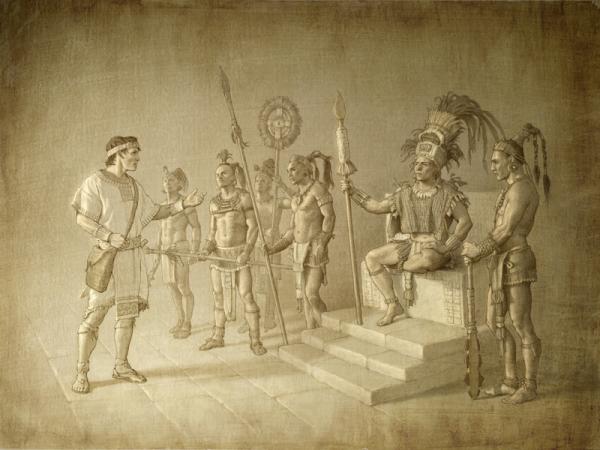
There are very few Centurions mentioned by name in the New Testament. In the gospel according to Luke, a certain Centurion, who upon hearing that Jesus Christ had come into Capernaum, immediately sent the elders of the Jews to plead with the Savior to heal a servant of his, who was sick unto death. In a very few verses, we can feel the love of this Roman leader for those in his house, especially for his dying servant, who was especially dear to him.

In Luke 7, we read:

4 And when they came to Jesus, they besought him instantly, saying, That he was worthy for whom he should do this:
5 For he loveth our nation, and he hath built us a synagogue.

The Jews at this time were not known for their affection toward their rulers or for keeping company with anyone of another nation or Gentile, considering them all unclean.  But these elders, being as it were, teachers and shepherds of their flocks, truly favored their commander. He had paid to have a place of worship built for them and proved to be a good caretaker. They emphasized his love for the people of Judah.

6 Then Jesus went with them. And when he was now not far from the house, the centurion sent friends to him, saying unto him, Lord, trouble not thyself: for I am not worthy that thou shouldest enter under my roof:

There is no doubt in my mind that he was familiar with their customs and knowing only by word of mouth that the Son of God was approaching, he sent others to stop him from entering his home, or perhaps even setting foot on his property. For perspective, let’s look at another Centurion, Cornelius, who was ministered to by an angel and also by the apostle Peter in Acts 10:

25 And as Peter was coming in, Cornelius met him, and fell down at his feet, and worshipped him.
26 But Peter took him up, saying, Stand up; I myself also am a man.
27 And as he talked with him, he went in, and found many that were come together.
28 And he said unto them, Ye know how that it is an unlawful thing for a man that is a Jew to keep company, or come unto one of another nation; but God hath shewed me that I should not call any man common or unclean.

To make the long story short, after having been ministered to by an angel, Peter taught Cornelius, who had fasted for four days, and baptized him and others. This is a great chapter and worth reading to understand the full context of the story.

As illustrated, I believe that the Centurion who’s servant was dying, knew that it was unlawful for a Jew to keep company with a Gentile, and the Centurion out of great respect did not want to make such an imposition upon Jesus Christ. And believing their tradition, he felt himself especially unworthy of His divine presence.

7 Wherefore neither thought I myself worthy to come unto thee: but say in a word, and my servant shall be healed.

He acknowledges Christ’s divine power that a simple word spoken is all that is needed. Indeed if the emperor of Rome spoke a word, it became law. Furthermore, he acknowledges the Savior’s authority:

8 For I also am a man set under authority, having under me soldiers, and I say unto one, Go, and he goeth; and to another, Come, and he cometh; and to my servant, Do this, and he doeth it.

When Peter smote off the ear of a man in Getheseme in a misplaced desire to defend Jesus Christ from being arrested, the Savior explains the following to Peter:

Matthew 26:53  Thinkest thou that I cannot now pray to my Father, and he shall presently give me more than twelve legions of angels?

A Centurion commanded an army of up to one hundred men known as a Century. There were various divisions known as Centuries, Cohorts, Legions, etc. A Legion typically consisted of approximately six thousand men comprising Centuries, Cohorts, and Horsemen. Twelve legions of angels would easily consist of 7,200 angels, six thousand for the Savior as well as for each of His apostles, excluding, of course, Judas, a traitor who stood opposite the Lord.

The Centurion was accustomed to commands and obedience to commands whether coming from his own superiors or whether he issued those commands himself. He is basically telling Jesus Christ that as men obey him, so would this sickness obey Christ. A simple word from the Master, and it was as good as done. This Centurion, who did not consider himself worthy of the Son of God’s presence, yet was considered worthy by his own friends and especially the elders of the Jews, displays the kind of meekness and humility which Christ had recently preached in His sermon on the mount.

9 When Jesus heard these things, he marvelled at him, and turned him about, and said unto the people that followed him, I say unto you, I have not found so great faith, no, not in Israel.
10 And they that were sent, returning to the house, found the servant whole that had been sick.

Jesus Christ taught that of such is the kingdom of heaven. His astonishment at the humility of a Gentile invoked from the Savior the same compassion, which the Centurion held for all those in his house. This is the kind of love and compassion, which Jesus Christ continually displayed for others. This Centurion was likely among  the first fruits of the coming Gentile harvest.

I can only imagine that the joy, which the Centurion felt when his servant was made whole will be very similar to the joy our Savior will feel when we are made whole and brought back into His presence. His servant, through the merits of Jesus Christ, overcame death and through His merits we will also overcome death and likewise be brought back into His presence one day.

The Brigham City Temple

Tags

, , , , ,

The Temple and its purpose has been an integral part of the gospel of Jesus Christ since the days of the ancient prophets of the Old Testament. Indeed Moses was commanded to build a tabernacle so that He could dwell among the congregation of  Israelites as He lead them to their promised land.

Exodus 25:8  And let them make me a sanctuary; that I may dwell among them.

The Lord also instructed Solomon to build a temple–a house of the Lord, which was completed about 1,000 BC and stood until it was destroyed by fire during the Babylonian conquest approx. 600 BC. It was rebuilt thereafter under Cyrus, who allowed the Jews to return to Jerusalem and later under Darius roughly 500 BC.

Ezra 1:2 Thus saith Cyrus king of Persia, The Lord God of heaven hath given me all the kingdoms of the earth; and he hath charged me to build him an house at Jerusalem, which is in Judah.

The temple at Jerusalem was central to the life of the Jews where sacred ordinances were performed for the benefit of man. Jesus Christ spent time as well teaching therein as did His apostles.

Luke 19:47 And he taught daily in the temple…

Acts 5:42 And daily in the temple, and in every house, they ceased not to teach and preach Jesus Christ.

Not long after Jesus ascended into heaven, the temple was destroyed again by the Romans in 70 AD. His apostles had all, except for John, been killed because of their faith. Temple ordinances and the authority to perform them had become lost, but would not be lost forever. Isaiah prophesied that the temple would return in the last days.

Isaiah 2:2 And it shall come to pass in the last days, that the mountain of the Lord’s house shall be established in the top of the mountains, and shall be exalted above the hills; and all nations shall flow unto it.
3 And many people shall go and say, Come ye, and let us go up to the mountain of the Lord, to the house of the God of Jacob; and he will teach us of his ways, and we will walk in his paths: for out of Zion shall go forth the law, and the word of the Lord from Jerusalem.

Like the temple at Jerusalem, which was built on Mount Moriah, thus being called the mountain of the Lord’s house, a temple was built in the top of the mountains after the latter-day saints were killed, persecuted and driven from state to state until they migrated to what is now the state of Utah, settling in the Salt Lake Valley along the Wasatch Mountains. This range spans 220 miles from Mt. Nebo on the south end near Nephi all the way to the craggy Sheep Rock point in Soda Springs, Idaho on the north end. Since then many temples have been built along this western range of the Rocky Mountains as well all around the globe among all nations as the Lord intended:

Mark 11: 17 And he taught, saying unto them, Is it not written, My house shall be called of all nations the house of prayer?

Today in the temple, the Lord communes with those who, with a broken heart and contrite spirit, come unto Him. The ordinances therein, being ceremonial, are merely the “endowments” or the “gifts” that we are given, which prepare us for the actual event, which is returning to His presence. He does this just as He did with the Israelite congregation who followed Moses through the wilderness who abode His laws–prerequisites for such divine blessings.

Some ordinances include baptism for those who have died without the gospel of Jesus Christ in their lives–

1 Corinthians 15:29 Else what shall they do which are baptized for the dead, if the dead rise not at all? why are they then baptized for the dead?

–Because He died for everyone, not only those who believe in His name or know Him. A loving God is no respector of persons and esteems all of us equally. For this reason, Jesus Christ preached to those souls who went to prison rather than paradise after He was crucified.

1 Peter 3:18 For Christ also hath once suffered for sins, the just for the unjust, that he might bring us to God, being put to death in the flesh, but quickened by the Spirit:
19 By which also he went and preached unto the spirits in prison;
20 Which sometime were disobedient, when once the longsuffering of God waited in the days of Noah, while the ark was a preparing, wherein few, that is, eight souls were saved by water.

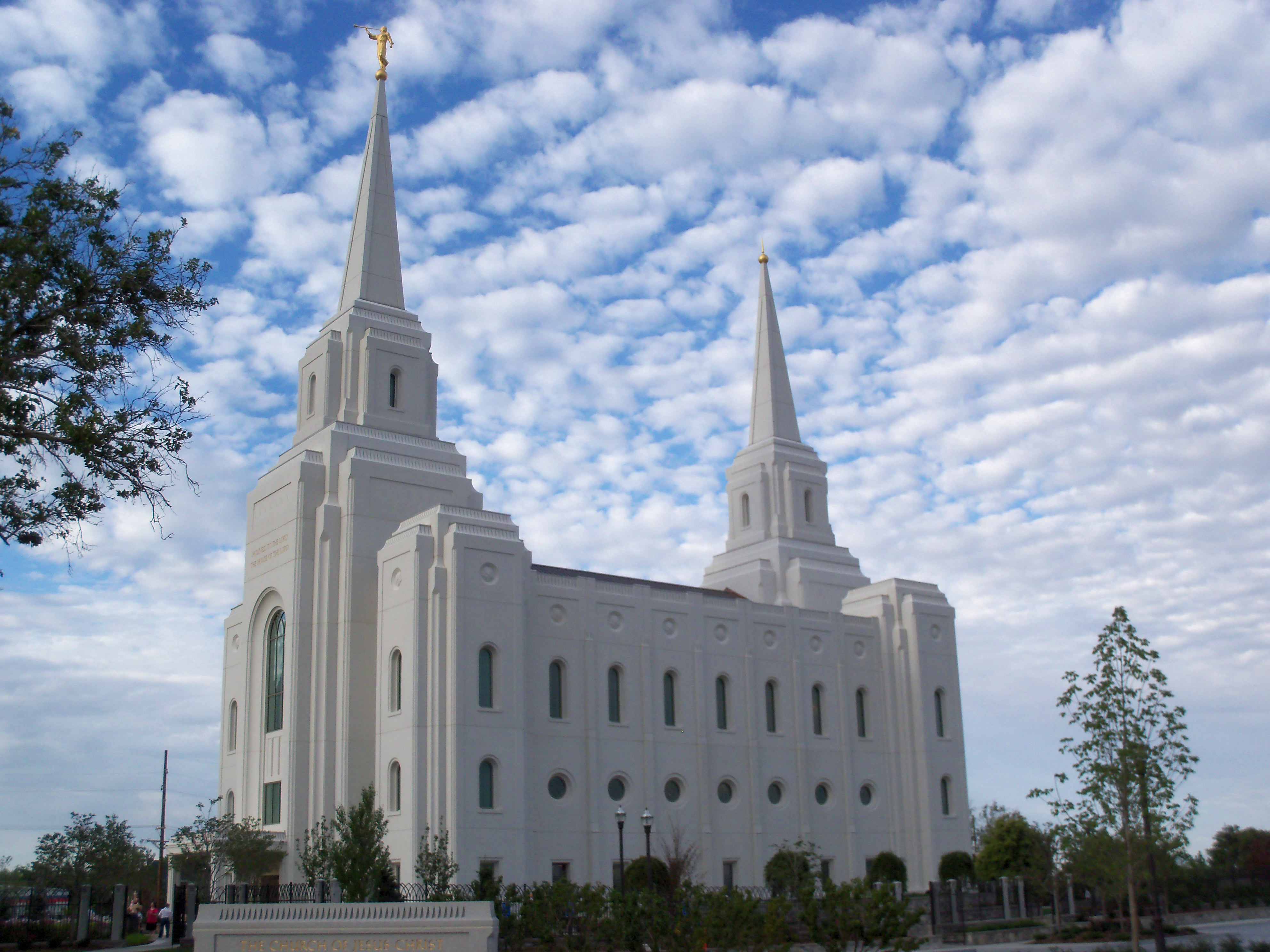
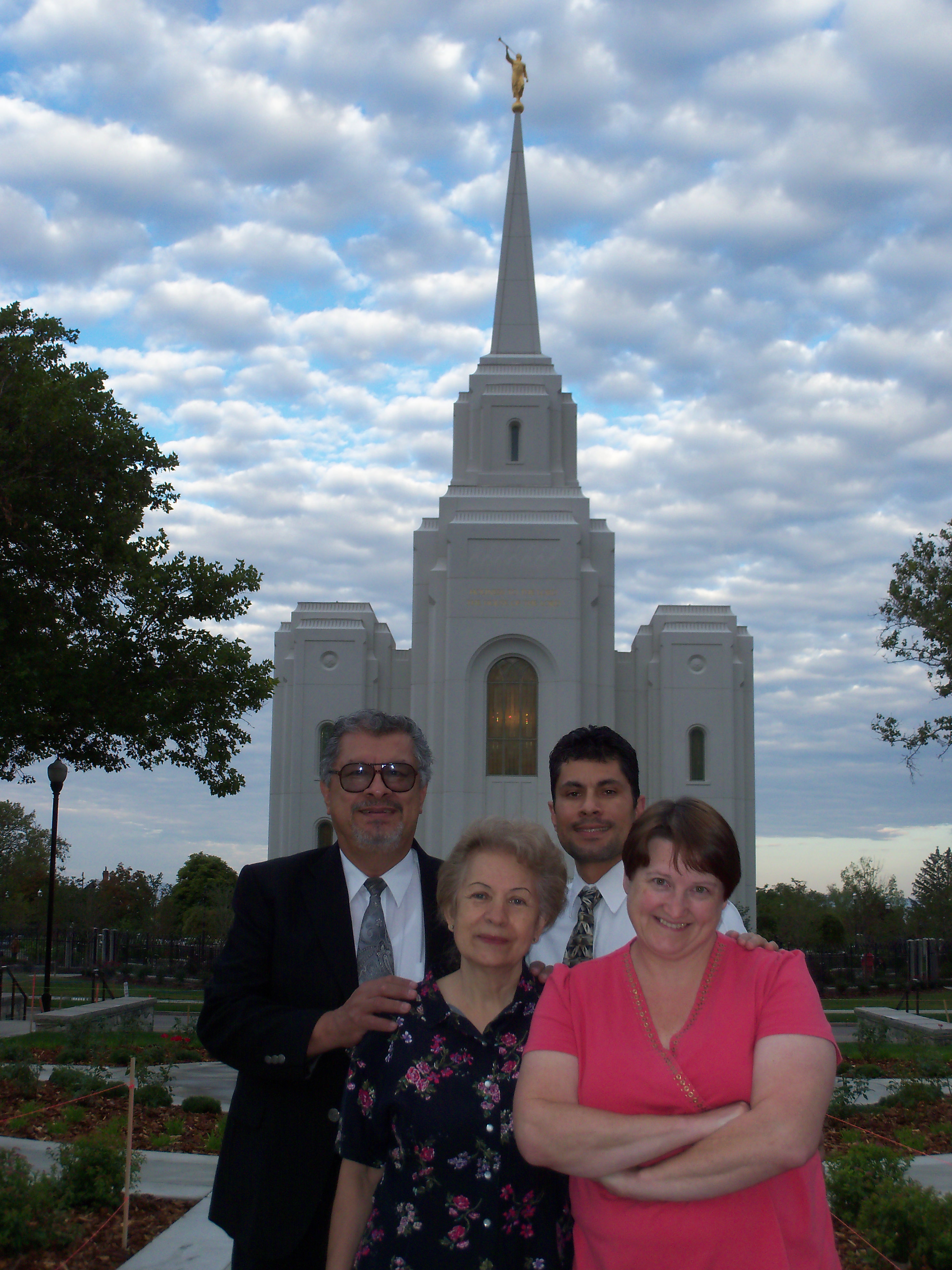
Like the the apostles of old, who taught in the temple, so are we taught in our temples today and prepared to return to a loving Father in Heaven. One of the most important ordinances that only happen in the temple are being sealed to our families for time and all eternity. It was in a temple that I was sealed to my wife, Lori, for time and all eternity and not just until death do we part. The gospel of Jesus Christ was designed to bring us all back to our Father’s kingdom to dwell with Him throughout eternity. It has been a great blessing to watch the temple being built the last couple years. The Brigham City Temple will be dedicated to the Lord’s work tomorrow, September 23, 2012. It will be open on Tuesday, September 25th for its first session. I have reserved a morning session and I look forward to communing with the Lord therein and very often after that.

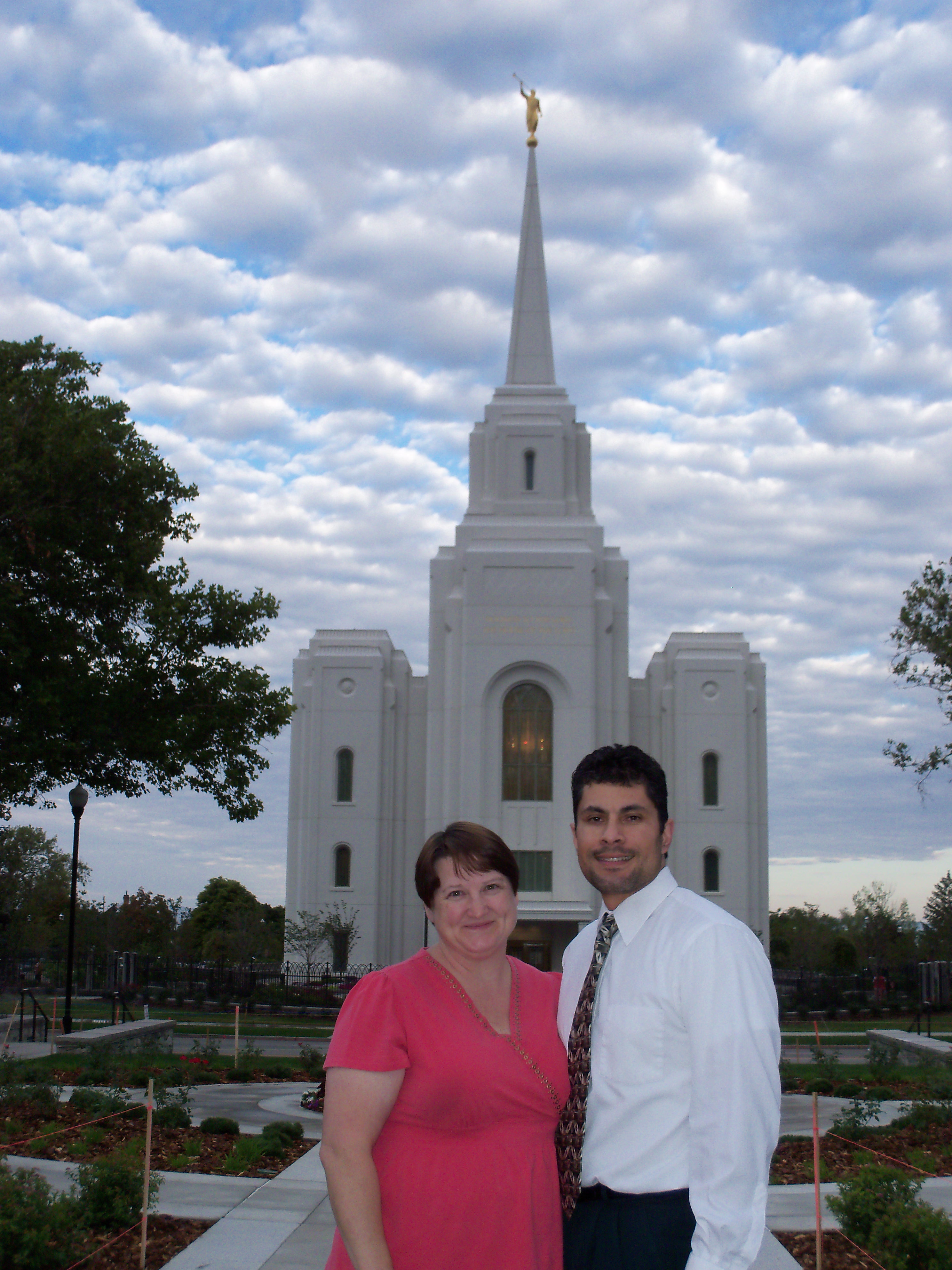
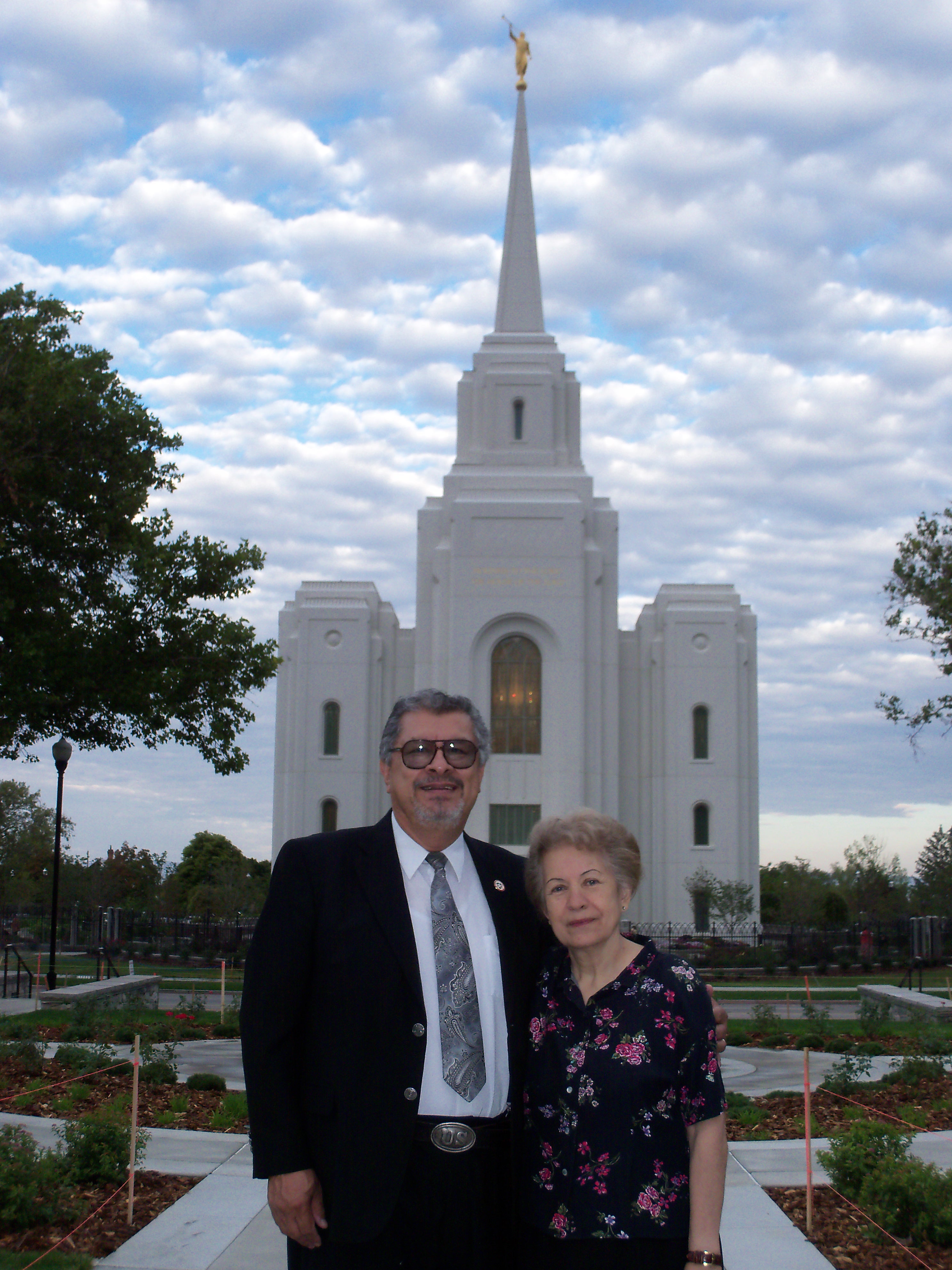
My parents visited very recently and the day before they flew back to Texas, we had a small window of opportunity to do a quick photo shoot. It was still relatively early in the morning and I hoped it wouldn’t be too dark and overcast. It was a bit darker than I had hoped, but the cloudy overcast made quite a beautiful backdrop for the pictures we took that morning:

The Brigham City Temple

Lori and me:

Dad and Mom:

All of us:


Fear the chancla!

Tags

This one is dedicated to all my Mexican brothers and sisters. Decades ago, the Mexican sandal was aerodynamically designed for butt whooping. It had the perfect weight and balance and fit in the palm of the parent’s hand with ergonomic precision. And it was decent footwear, too. But when that chancla started flying, children started crying. And yet we turned out alright–or at least we like to think so.

“¡Mueve la mano! Mueve la mano! Mueve la mano!”

You ran around in circles trying to dodge the pain. Once in a while it would slip or they’d miss and the sandal ended up across the room and you thought for a moment you were safe.

“¡Ahora tráigame la!!”

And of course you obeyed. You knew what was coming if you didn’t–more. I’ll never forget the day I had made my first set of nunchucks. I was a big fan of old television martial arts serials and I thought one day, I’d be a kung fu master. So I cut up an old broom stick, fashioned a small rope, and with the help of some electric tape, I had become a legend in my own mind. I don’t even remember how young I was.

One day I was twirling that thing around and around in my right hand in the living room and I thought I was pretty good. I figured I had mastered the right hand so I started whipping it around and over with my left hand when within half a second, I had shattered–no, obliterated the ceiling fan lamp globe that hung above. No sooner had reality set in than fear did–of the chancla.

I knew I was going to get it. My mind raced into overdrive to figure out a way to make this right before my dad got home. I decided that the best way was to make some money to either buy a new globe and replace it with a replica (maybe he wouldn’t notice!) or at least to give my my dad the money to cover the cost of replacing it. After cleaning up my mess, I raced to a neighbor’s home to see if I could wash a car or mow a lawn. I told her I needed to earn money that day and badly.

She had a friend or relative that needed work done in her yard and I was sold. So she drove me over there and it was clear on the other side of town. Not only was I way out of my comfort zone, I was in another world, totally foreign to me. To top it off, when I stepped into that back yard, there was no lawn, no garden. Just a blanket of weeds as tall as me that covered every square inch of that property. At this point, I don’t know which was worse, the hell I was about to endure or the dreaded chancla.

I spent hours and hours inching my way around, skillfully raising and lowering the mower to turn that weed infested jungle into a finely manicured weed bed. I had finally earned my money and returned home after what seemed like an eternity. Looking back, I don’t even remember the undying drudgery. I only remember my dad’s reaction when I told him everything that happened as soon as he walked in the front door. I’m not sure I ever saw my dad laugh so hard at this point in my life. This was not the reaction I had expected. I’m not sure if I felt humiliated or what. I think I just felt stupid. Could I have avoided the sandal of doom? Could I have avoided being taxied to the other side of the world into some kind of hell to labor as a servile captive?

I think the most important lesson I learned from this ignominious failure is to go with what you know. Yes, the chancla is one of the most dreadful things in a Mexican childhood, but it’s over relatively quickly, like pulling off a band-aid from a dried wound. As the old proverb goes, “better the devil you know than the devil you don’t.”

Did I ever stop swinging my nunchucks? Nope!!


An Overflowing Scourge

Tags

, , , , , , , , ,

Jerusalem fell. The Jaredite nation fell. The Nephite nation fell. Each nation was warned about pride, idolatry, idleness and more time and time again since the day Moses led Jacob out of Egypt. He took Israel out of Egypt, but he couldn’t take Egypt out of Israel. Soon after they crossed the Red Sea and Moses left them for a moment, his people began the building of a graven image to worship–a golden calf.

With the blessing of each nation came prosperity. With that prosperity came pride and thereafter their fall. After the Nephite nation fell, the Lamanite nation dwindled in unbelief, bringing us to our day in the gentile nation–America. The last prophet of the Book of Mormon warned us that we will follow in their footsteps and suffer the same fate as they suffered. He revealed to us in great detail how their government had been corrupted and how their entire civilization had been destroyed from within so that we could avoid the same pitfalls.

Ether 8
23 Wherefore, O ye Gentiles, it is wisdom in God that these things should be shown unto you, that thereby ye may repent of your sins, and suffer not that these murderous combinations shall get above you, which are built up to get power and gain—and the work, yea, even the work of destruction come upon you, yea, even the sword of the justice of the Eternal God shall fall upon you, to your overthrow and destruction if ye shall suffer these things to be.
24 Wherefore, the Lord commandeth you, when ye shall see these things come among you that ye shall awake to a sense of your awful situation, because of this secret combination which shall be among you; or wo be unto it, because of the blood of them who have been slain; for they cry from the dust for vengeance upon it, and also upon those who built it up.

Moroni also writes:

35 Behold, I speak unto you as if ye were present, and yet ye are not. But behold, Jesus Christ hath shown you unto me, and I know your doing.
36 And I know that ye do walk in the pride of your hearts; and there are none save a few only who do not lift themselves up in the pride of their hearts, unto the wearing of very fine apparel, unto envying, and strifes, and malice, and persecutions, and all manner of iniquities; and your churches, yea, even every one, have become polluted because of the pride of your hearts.

Clearly none of us are exempt, especially not those in the Lord’s own house:

D&C 112
23 Verily, verily, I say unto you, darkness covereth the earth, and gross darkness the minds of the people, and all flesh has become corrupt before my face.
24 Behold, vengeance cometh speedily upon the inhabitants of the earth, a day of wrath, a day of burning, a day of desolation, of weeping, of mourning, and of lamentation; and as a whirlwind it shall come upon all the face of the earth, saith the Lord.
25 And upon my house shall it begin, and from my house shall it go forth, saith the Lord;

By the time Samuel the Lamanite, a stranger, even a foreigner, had come to warn the “sleeping” Nephites, the likes of Amalickiah, Kishkumen and Gadianton had quietly usurped power at every level of government. Where is our modern day Samuel the Lamanite to warn us? Or have we already been warned time and time again, but we are too caught up in worldly things, like the ancient Israelites were of their world? Are we too busy worshiping our own golden calves to notice that modern day Kishkumens and Gadiantons have take control of every level of our own government for the sole purpose of getting gain?

By now only few have awakened enough to see the pattern of history repeating itself. The Nephites undoing was their own pride and rejection of their Savior and heavenly protector. It is ironic that the Lord gives us exactly what we want. When people decide they don’t need God in their lives anymore, they follow their own wisdom and understanding. This is their greatest folly. So as a nation we are left to our own devices, straying further and further from Him. And when those in the Lord’s own house take lightly the very road map that tells us where all the roadblocks and dead ends are, they receive the greater condemnation for it.

We live in a generation of depravity, social disintegration and worse. It has gotten to the point where our own children don’t have much of a chance OR a choice in life as abortions range in the countless millions. This has become our culture. How much longer before that day of wrath and of burning are upon us? A child could see the writing on the wall. America will be cleansed as will the world.

Have we missed our modern day Samuel the Lamanite? Our Jeremiah? Our Abinadi? Or have they been with us all along? Joseph Smith and John Taylor are two examples:

D&C 45
26 And in that day shall be heard of wars and rumors of wars, and the whole earth shall be in commotion, and men’s hearts shall failthem, and they shall say that Christ delayeth his coming until the end of the earth.
27 And the love of men shall wax cold, and iniquity shall abound.
31 And there shall be men standing in that generation, that shall not pass until they shall see an overflowing scourge; for a desolating sickness shall cover the land.

John Taylor, the third LDS president and prophet, received the following vision concerning the “overflowing scourge,” which becomes a “desolating sickness”:

The first thing that I recognized was that I was in the tabernacle of Ogden, Utah…I arose to speak and said that I did­n’t know that I had anything es­pecially to say, ex­cept to bear my tes­timony of the Latter-day work, when all at once it seemed as if I was lifted out of myself and I said, “Yes, I have something to say and that is this: Some of my brethren have been ask­ing, “What is be­coming of us? What is the wind blowing?” I will answer you right here what is coming very shortly.”

I was then in a dream, im­mediately in the city of Salt Lake, and wandering around in the streets and in all parts of the city, and on the doors of the houses I found badges of mourn­ing and I could not find a house but was in mourning…

It seemed strange to me that I saw no person in the streets in all my wan­dering around the coun­try. I seemed to be in their houses with the sick, but saw no funeral proces­sion, nor anything of the kind, but the city looking still and as though the people were praying. And it seemed that they had controlled the dis­ease, but what the dis­ease was I did not learn; it was not made known to me. I then looked over the country, north, east, south, and west, and the same mourning was in every land and in every place…

The next thing I knew I was just this side of Omaha. It seemed though I was above the earth, and look­ing down upon it. As I passed along upon my way east I saw the road full of people, mostly women, with just what they could carry in bundles on their backs, trav­eling to the moun­tains on foot. I won­dered how they would get through with such a small pack on their backs…

I continued east by the way of Omaha and Council Bluffs, which were full of disease. There were women every­where. The state of Illinois and Mis­souri were in a tumult, men killing one an­other, women joining the fight­ing, fam­ily against family in the most horrid manner…I was in Wash­ington and I found desola­tion there. The White House was empty and the Halls of Congress the same, and everything in ru­ins. The people seemed to have left the city and left it to take care of itself.

I was in Baltimore. In the square where the Monument of 1812 stands in front of the Char­les Hotel. I saw dead piled up so as to fill the street square. I saw mothers cutting the throats of their own children for their blood. I saw them suck it from their throats to quench their own thirst and then lie down and die. The water of Che­sapeake Bay was stagnant, and the stench arising from it on ac­count of their throw­ing their bod­ies into it so terrible, that the very smell carried death with it. I saw no man ex­cept they were dead or dying in the streets and very few women. Those I saw were crazy and in an ugly condi­tion. Everywhere I went I beheld the same sights all over the city; it was terrible be­yond description to look upon.

I thought this must be the end; but no, I was seemingly in an instant in the city of Philadel­phia. There eve­rything was still. No living soul was there to greet me. It seemed the whole city was with­out any inhabi­tants. In the south of Chestnut Street and in fact everywhere I went, the putrefaction of the dead caused such a stench that it was impos­sible for any living thing to breathe, nor did I see any living thing in the city.

Next I found myself in Broadway, in the city of New York, and there it seemed the people had done the best they could to overcome the disease, but in wandering down Broad­way I saw the bodies of beautiful women lying, some dead and oth­ers in a dy­ing condition, on the sidewalks. I saw men come out of cellars and ravish the per­sons of some that were yet alive and then kill them and rob their bodies of all the valu­ables they had upon them. Then before they could get back to the cellar they would roll over a time or two and die in ag­ony. In some of the back streets I saw them kill some of their own offspring and eat their raw flesh, and in a few minutes die them­selves. Every­where I went I saw the same scene of horror and de­struction and death and rap­ine.

No car­riages, buggies, or cars were running; but death and de­struc­tion were every­where. Then I saw fire start and just at that moment a mighty East wind sprang up and car­ried the flames over the city and it burned until there was not a sin­gle building left standing there, even down to the waters edge. Wharves and shipping all seemed to burn and follow in common destruction where the “great city” was a short time ago. The stench from the bodies that were burn­ing was so great that it was carried a long dis­tance cross the Hudson Bay and carried death and destruction wherever it pene­trated. I cannot paint in words the horror that seemed to compass me about; it was beyond description of man.

I sup­posed this was the end; but it was not. I was given to understand the same horror was being en­acted all over the coun­try, east, west, north, and south. Few were left alive, still there were some. Immediately after I seemed to be standing on the left bank of the Mis­souri River, opposite e the City of In­de­pendence, but there was no city. I saw the whole state of Missouri and Illi­nois and all of Iowa, a complete desert with no living being there…

This overflowing scourge begins among the Latter-day Saints who “profess” to know the Lord, yet blaspheme. These are the they who partake of the sacrament unworthily, attend the temple unworthily, etc. thus profaning what is holy. It will then spread throughout the nation from coast to coast. I find it interesting that an East wind brings a terrible fire after this scourge leaves the land barren. In ancient times, the East wind brought plagues such as locusts and also famines. I suspect that the great fire in this vision results from the East wind bringing nuclear destruction. We will reap the chaff in the whirlwind what we have sown, as Abinadi prophecied would happen to King Noah. This brings to mind some of Isaiah’s writings, although directed at Jerusalem, that when read in the context of John Taylor’s vision, makes perfect sense:

Isaiah 3
16 Moreover the Lord saith, Because the daughters of Zion are haughty, and walk with stretched forth necks and wanton eyes, walking and mincing as they go, and making a tinkling with their feet:
17 Therefore the Lord will smite with a scab the crown of the head of the daughters of Zion, and the Lord will discover their secret parts.
18 In that day the Lord will take away the bravery of theirtinkling ornaments about their feet, and their cauls, and theirround tires like the moon,
19 The chains, and the bracelets, and the mufflers,
20 The bonnets, and the ornaments of the legs, and the headbands, and the tablets, and the earrings,
21 The rings, and nose jewels,
22 The changeable suits of apparel, and the mantles, and the wimples, and the crisping pins,
23 The glasses, and the fine linen, and the hoods, and the vails.
24 And it shall come to pass, that instead of sweet smell there shall be stink; and instead of a girdle a rent; and instead of well set hair baldness; and instead of a stomacher a girding of sackcloth;and burning instead of beauty.
25 Thy men shall fall by the sword, and thy mighty in the war.
26 And her gates shall lament and mourn; and she being desolate shall sit upon the ground.

There was a time when the United States was a beacon of light to the world. Perhaps to many it still is. I know many still believe in its founding principles, myself included, and fight to return to those principles of liberty, free agency, etc. Today, however, it is clear that, little by little, we have been taken over by Amalickiahs, Kishkumens and Gadiantons who tear down our title of liberty, replacing them with false flag operations. And because of our apathy, slothfulness, and preference to be distracted and entertained by modern day golden calves, far too few have “awakened to our awful situation,” which has gotten above us.

The only answer is to return our sights to a loving Father in Heaven whose arm is bare and outstretched all the day long and who can protect us from enemies, both foreign and domestic, when we seek His counsel rather than rely on our own limited judgment. It is tragic, however, that we will inevitably follow right behind the Nephites and the Jaredites and the ancient Israelites and repeat history. But the light at the end of the tunnel is the literal gathering of all the tribes of Israel, the building up of New Jerusalem by the “remnants” (of Joseph) and the final events that lead to the second coming of our Savior, Jesus Christ. And the government shall be upon His shoulders. And His name shall be called Wonderful, Counselor, the Mighty God, the Everlasting Father, the Prince of Peace.

No Samites

Tags

, , , , , , ,

After Nephi fled from his brethren with those who would follow him from the land of their first inheritance, they settled down in a place they chose to call Nephi. Two things have always stood out in my mind. The fact that Nephi had sisters and the fact that we never hear from Sam. Whether Nephi’s sisters were older and married to Ishmael’s sons, thus making this family the clear choice to bring them out of Jerusalem, or Lehi had at least two more daughters in the wilderness–or perhaps both are the case! It could well be that Nephi had older sisters married into Ishmael’s family and Lehi had at least one more daughter in the wilderness, and thus Nephi had sisters, as in plural.

Anyway, there have been commentaries on this matter for at least twenty years. One more thing that I want to mention is that I have noticed all my life how “silent” Sam is. I can’t help but feel that Sam wasn’t completely normal. He was obviously not deaf, blind or lame. He was strong and thus able to make the journey out of Jerusalem and back twice, once for the plates and once more for Ishmael’s family. Sam was intelligent and able to understand Nephi and believe all his words. His brothers had no problem smiting Nephi and Sam in the cavity of a rock after having fled Laban’s home, although the angel only acknowledged Nephi, at least according to Nephi’s account.

But we never once read about Sam commenting on anything. Sam was able to marry and have children. I, personally, can’t help but feel that Sam might have been unable to speak, as in, he might have been at the very least, mute. This is just speculation, of course but it begs the following questions: If Sam was as faithful as Nephi, then why was Sam not given the opportunity to lead or be a leader? Was he not mighty like Nephi? Why not? The only clue we have, which really isn’t much of a clue, but it does shed light on the fact that Sam was the “least of these.”

2 Nephi 4
10 And it came to pass that when my father had made an end of speaking unto them, behold, he spake unto the sons of Ishmael, yea, and even all his household.
11 And after he had made an end of speaking unto them, he spake unto Sam, saying: Blessed art thou, and thy seed; for thou shalt inherit the land like unto thy brother Nephi. And thy seed shall be numbered with his seed; and thou shalt be even like unto thy brother, and thy seed like unto his seed; and thou shalt be blessed in all thy days.

After Lehi blesses EVERYONE, even his grandchildren, he finally speaks to Sam. Rather than bless Sam according to his rank in the family, Lehi saves him for last. Lehi tells him that he is “like unto [his] brother.” Sam’s posterity becomes Nephi’s posterity. It’s just that simple. And the Book of Mormon history proved it. Nobody ever claimed to be a Samite. Many people, even wicked people claimed to be Zoramites, after Zoram who was pressed out of Jerusalem. So people hundreds and hundreds of years after Lehi, were well aware of their genealogy, but not a single Samite. Ever.

Jacob 1
12 And it came to pass that Nephi died.
13 Now the people which were not Lamanites were Nephites; nevertheless, they were called Nephites, Jacobites, Josephites, Zoramites, Lamanites, Lemuelites, and Ishmaelites.

This brings me back to my first scripture. Jacob said that “the people which were not Lamanites were Nephites; nevertheless, they were called Nephites, Jacobites, Josephites, Zoramites, Lamanites, Lemuelites, and Ishmaelites.” These were the people who went with Nephi. This means that there were indeed one or some children of Laman, maybe even Laman’s wife, as well as one or some children of Lemuel and possibly Lemuel’s wife, and some of Ishmael’s household who abandoned Laman and Lemuel in the land of their first inheritance to settle what they would call the city of Nephi. This may well have included some if not ALL of Nephi’s sisters, any of whom could have been married to Ishmael’s son. This was a very telling verse.